
Success story · Education · Health training
Clinical Simulation Center, Pontificia Universidad Javeriana
A full floor of twenty clinical spaces, connected over IP so that medicine and nursing students practise together and review every session with their instructor.
The Clinical Simulation Center at Pontificia Universidad Javeriana went from a set of separate rooms to a digitised floor: twenty spaces with networked cameras, microphones and displays that instructors operate from touch panels to record, observe and debrief every session.
Client
Pontificia Universidad Javeriana
Sector
Education · health training
City
Bogotá
Delivered
November 2023 – March 2024
Spaces
20 specialised spaces · 223 people
Systems
AV over IP, recording, debriefing and control
Brands
AREC, Shure, Crestron, Epson, Netgear · Dante protocol
Awards
AV Awards Americas 2025 · CALA Awards 2024
The challenge: two faculties learning in the same ecosystem
Javeriana opened Colombia’s first joint clinical simulation centre for its medicine and nursing faculties back in 2007. Almost two decades later, the university decided to modernise it completely.
The goal was for students from both disciplines to learn to work as a team, as they would in a real hospital, with the highest possible fidelity to an authentic clinical environment.
That meant turning a whole floor — consulting rooms, critical care areas, operating theatres, observation rooms and a central monitoring room — into a digitised complex running twenty spaces at the same time, with capacity for 223 students and instructors.
Starting point
This was not about installing equipment in each room: it was about connecting twenty rooms so they work as one teaching system.
The solution: AV over IP, designed for the people who teach
We designed and deployed an AV-over-IP infrastructure that connects cameras, microphones and displays on the network. Instructors can observe, record and debrief every clinical practice in real time.
The whole system is driven from simplified touch interfaces. Teaching staff with no technical background manage recording, select camera angles and run clinical variables on the simulators without depending on a technician.
Design criterion
The most sophisticated technology is useless if the people who use it every day cannot operate it.
The spaces we integrated
Each type of space needed a different mix of capture, audio and display, but all of them ended up under the same control layer.
Critical care areas
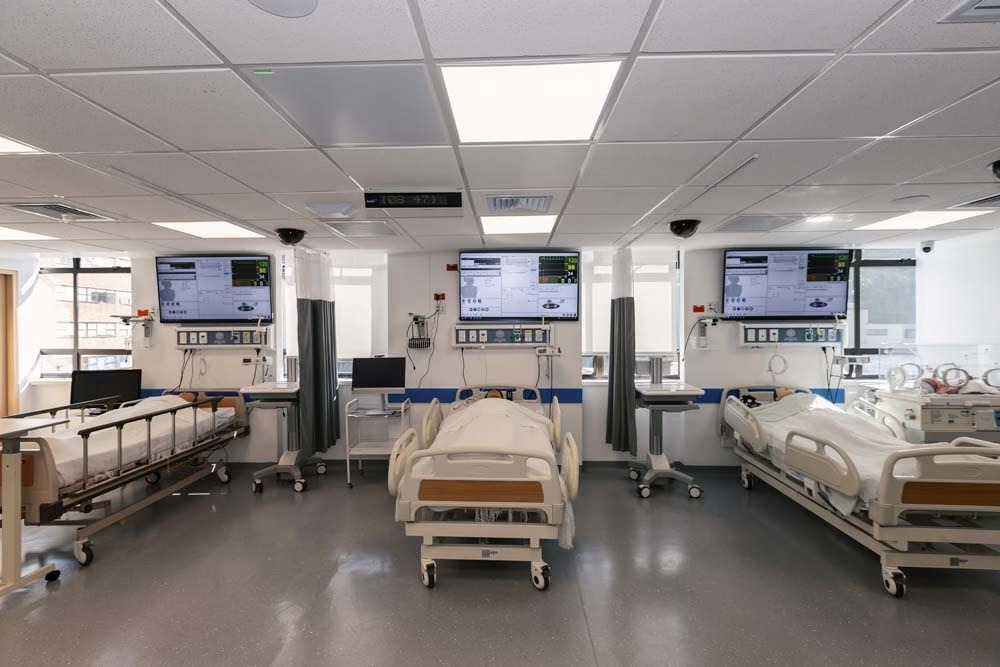
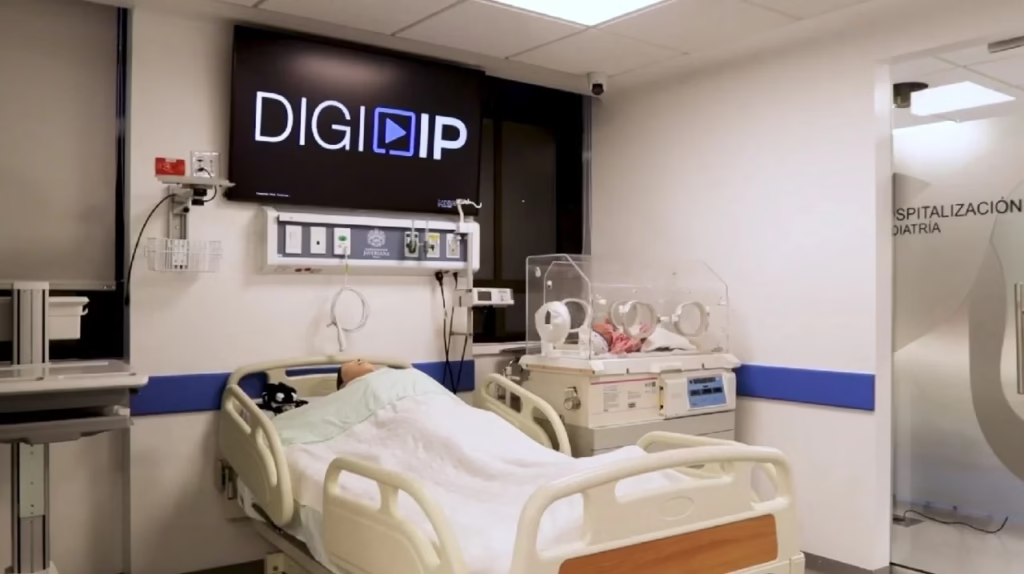
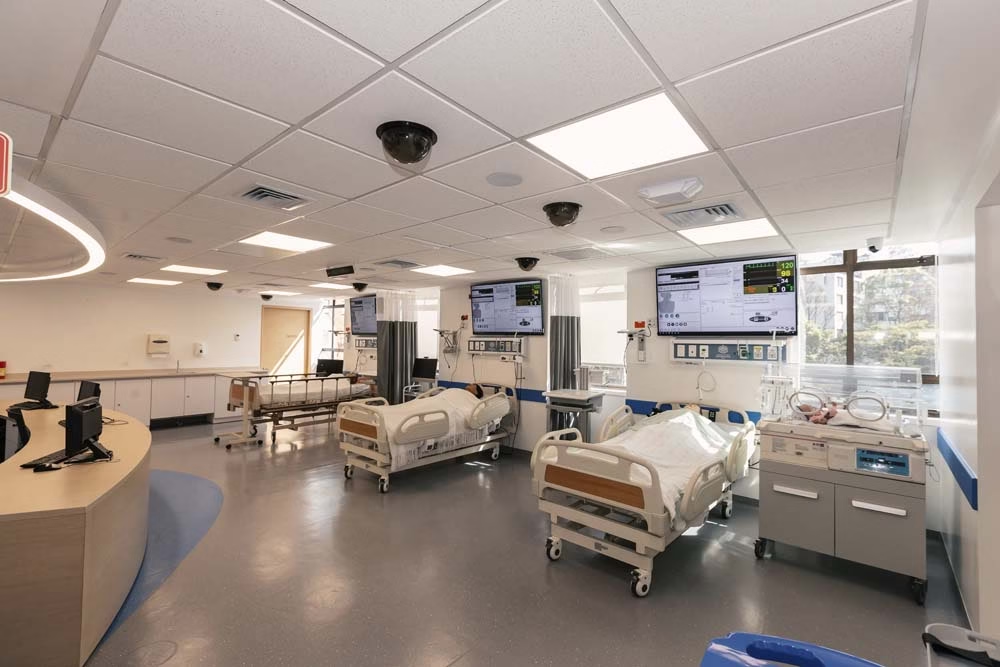
Simulation beds with vital-sign monitors, dome cameras in the ceiling and networked audio to follow the full session.
Consulting and procedure rooms
Enclosed spaces with video and audio capture for individual practice, on the same network as the rest of the floor.
Control and debriefing room
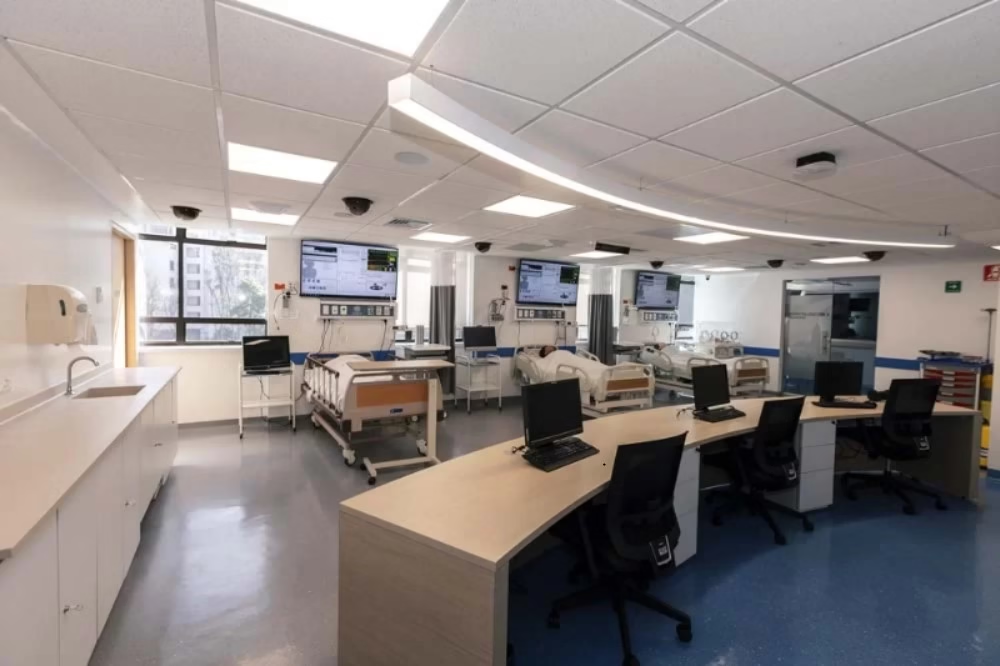
The instructor watches several rooms at once, marks the key moments of the simulation and replays them later with the group.
Observation rooms
Glass walls to watch the procedure without interrupting it, with the session recorded for later analysis.
The technology behind the project
Capture and recording
AREC equipment to record procedures in high definition and make them available for later review.
Networked audio with Dante
Shure microphones over the Dante protocol, so audio arrives without distortion: in a simulation every word counts.
Control and display
Crestron control over a Netgear network and Epson projection, operated from simplified touch panels.
Delivered to AVIXA standards
The project followed AVIXA’s international standards, which cover everything from display sizing to rack design and structured cabling labelling.
That discipline is what keeps a centre like this running reliably for years, not only on opening day.
The result
Medicine and nursing students now practise on high-fidelity simulators that reproduce vital functions, while networked cameras and microphones record and stream every session.
That reduces the need to expose students to critical procedures on real patients during their first practices, and lets several groups learn from the same simulation at once.
The newspaper Portafolio covered the project under the headline «La Pontificia Universidad Javeriana usa tecnología audiovisual para salvar vidas».
20
specialised spaces running at the same time on a single audio and video network, with capacity for 223 people.
Developing the Medical Simulation Center at Pontificia Universidad Javeriana was far more than a technology project for Integración AV. It was a chance to contribute directly to the training of health professionals, creating spaces designed for learning, practice and decision-making in controlled environments.
Juan Carlos Gutiérrez, managing director of Integración AV
Industry recognition
The project received two international awards from the AV industry:
- AV Awards Americas 2025 — Project of the Year in Learning Environments, in the first edition of this AV Magazine programme.
- CALA Awards 2024 — for the same simulation centre.
The jury, an independent panel of end users, consultants and industry leaders, highlighted three things: the ability to unify previously fragmented systems into one coherent environment, a design that lets non-technical staff operate the space, and the project’s impact on the quality of health training. The full story is in our note on the AV Awards Americas.
Project photos
You may also like
The full story of the project · What a medical simulation centre is · Interactive classrooms and smart boards · Education sector
Let's integrate your next learning space
The first conversation is a technical one: we review the space, how teaching happens in it and which equipment can be reused. Then we prepare a proposal with scope, drawings and schedule.
Bogotá and Medellín · +57 301 656 9858

