
We design and integrate monitoring centers, control rooms, and crisis rooms in Colombia. Every piece of operational information — cameras, sensors, data dashboards, and video — comes together on a single wall, governed by control software. We work with government agencies, security companies, and operations centers that can’t afford to lose visibility.


A monitoring center is a room where an operation is supervised in real time. Integración AV designs, programs, installs, and maintains these rooms in Colombia: video walls, control software, camera and system integration, and architecture built for 24-hour operation. We cover monitoring centers, control rooms, and crisis rooms.
We operate from Bogotá and Medellín, with national coverage.
In a critical operation, information arrives scattered. The cameras are on one system, the sensors on another, the data dashboards on separate screens, and the operator jumps from one to the next while something is happening. The cost of that scatter isn’t inconvenience — it’s the time lost understanding the situation.
A monitoring center solves that by bringing every source together on one video wall. Each signal opens, moves, and resizes according to what the room needs to see at that moment. The decision is made with the full picture in view, not rebuilt screen by screen.
The three terms are used as synonyms, and they aren’t. The difference isn’t the technology, which is nearly identical, but the moment of the operation each space serves.
Monitoring center. The space for permanent supervision. Operators watch cameras, sensors, and systems continuously, in shifts, to catch what falls outside normal before it escalates. Its value is sustained vigilance and the ability to react fast.
Operations control room. A monitoring center oriented to a process rather than a space. It supervises how a service runs — a plant, a network, a transit system — and its wall shows operating variables in addition to video. In commercial practice, “control room” and “monitoring center” name the same type of project.
Crisis room. The space where decisions are made once a situation has already escalated. It doesn’t run all day: it activates, gathers the people in charge, receives the information coming from the monitoring center, and is used to execute the corresponding protocol. That’s why it needs video conferencing and secure connections with field staff and outside command, in addition to the wall.
Many organizations have all three spaces and design them separately, which ends up duplicating systems. We design them to share sources and control: what the operator sees in the monitoring center can be pulled into the crisis room without rewiring anything.
A monitoring room is designed the opposite way from a boardroom. In a boardroom the standard is the experience of someone in the room for an hour; here the standard is what happens when the system fails at three in the morning with a single operator on shift.
That drives the three decisions that shape the project. The first is redundancy: which components are duplicated so a single failure doesn’t leave the room without an image. The second is switching: how any source reaches the wall without the operator having to get up or call support.
The third is documentation. We deliver the room with floor plans, single-line diagrams, and schematics under AV industry standards, so a technician who wasn’t part of the build can understand and maintain it. In continuous operation, an undocumented room is a room nobody knows how to service two years later.
On top of that comes the work with what already exists. When the client’s cameras, monitors, or cabling are in good condition, we reuse them instead of replacing them: it lowers the project cost and avoids discarding equipment that still works.
Monitoring rooms are common wherever large numbers of people gather or a service can’t stop: shopping centers, campuses, administrative offices, industrial complexes, transit stations, and airports. Traffic authorities, for example, use them to watch a city’s mobility with cameras and react in time.
In those cases the room is often connected to outside agencies, such as police or fire departments, so the alert goes out the moment the operator detects it.
Our main office is in Bogotá, at Calle 42 #27A-45, Office 403, and we have an office in Medellín. From there we serve most of the country’s monitoring and control projects.
For projects in other cities we send our own technicians or work with certified technical partners. In a room that runs continuously, the important question isn’t who installs it but who responds when something fails six months later: that commitment is put in writing in the proposal.
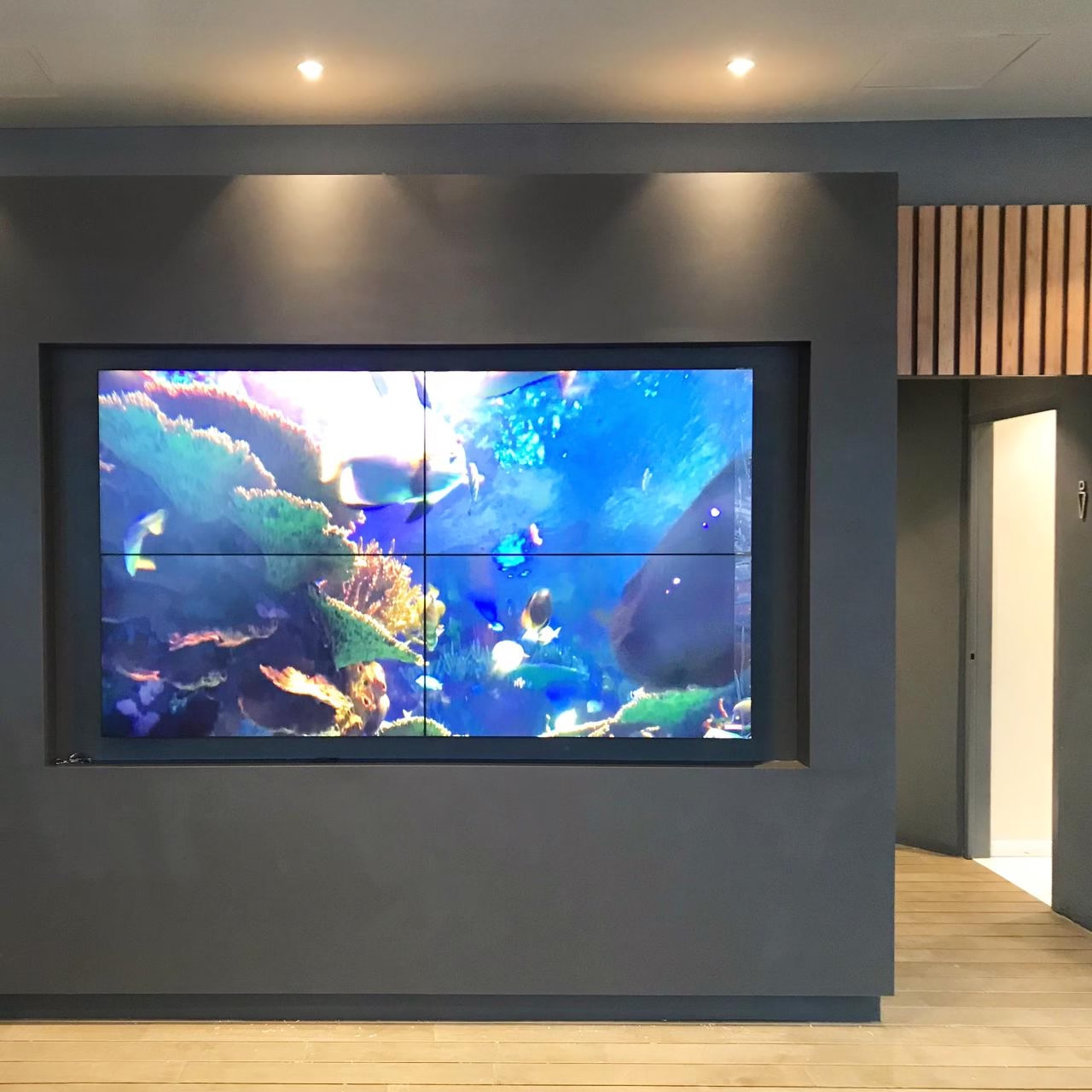
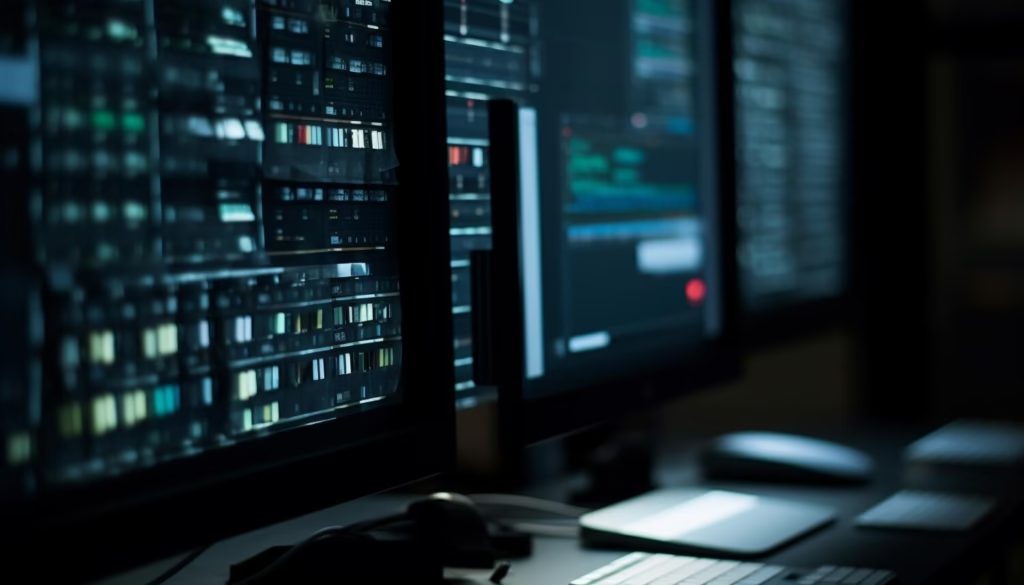
Monitoring centers and control rooms for public agencies that supervise security, mobility, or infrastructure in real time.
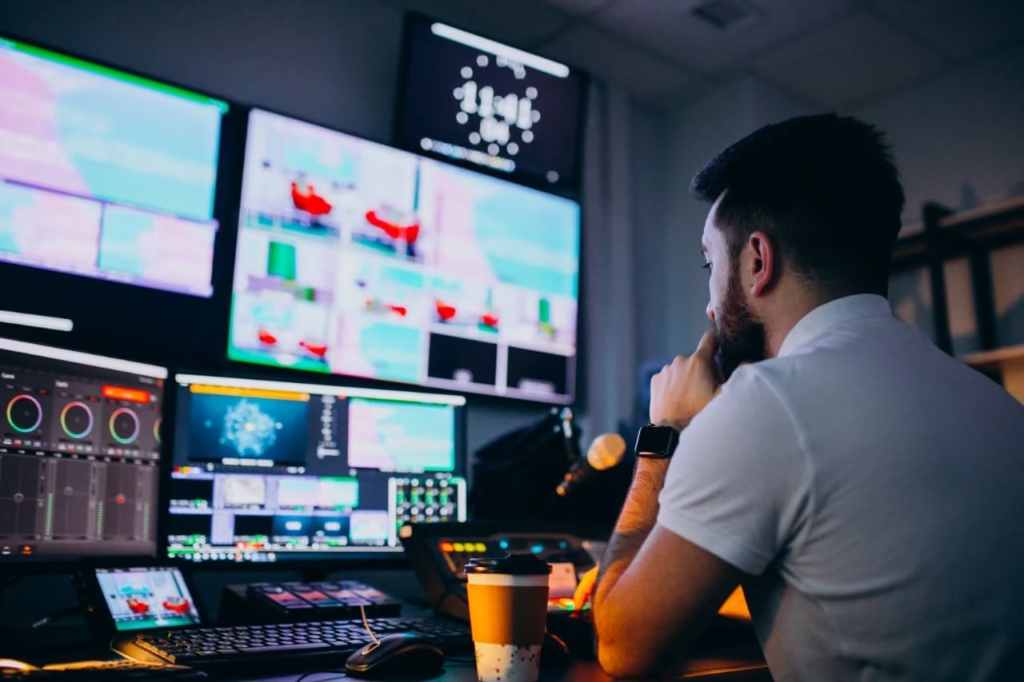
Control rooms with a video wall and camera and security-platform integration for 24/7 surveillance operations.
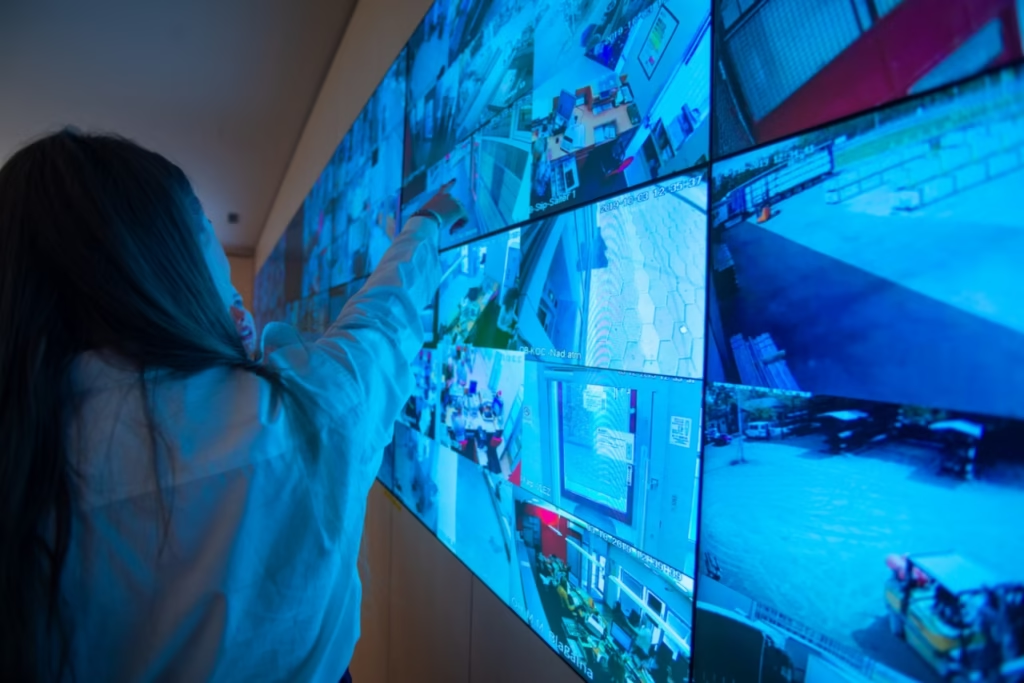
Rooms that centralize a company's indicators, cameras, and systems on a single video wall.

Decision-making spaces under pressure, with real-time visualization of the operational situation.
We study the scope of every platform so we combine only what your operation needs. Knowing what to leave off the wall matters as much as knowing what to integrate.
We design with redundancy and document the room under AV industry standards, so a single fault doesn't stop monitoring.
Integrating audiovisual spaces in Colombia since 2006, with two industry awards: AV Awards Americas 2025 and CALA Awards 2024.
Design, programming, installation, operator training, and after-sales support. The room is delivered working and maintained for its entire useful life.

Tell us about the space and your estimated date. A specialist replies during office hours.
If your question isn’t here, write to us: a specialist replies during office hours.
The first conversation is a technical consultation: we learn about your operation, the sources you need to integrate, the shifts, and the situations the room must cover. From there we prepare a proposal with the AV drawings, the wall’s architecture, the installation schedule, and the after-sales model. Monitoring centers are a nationwide coverage line.
Request a technical consultation · Phone +57 301 656 9858 · Message us on WhatsApp
A specialist replies during office hours, Monday to Friday, 8:00 AM to 6:00 PM (Colombia time).
Replies during office hours.

