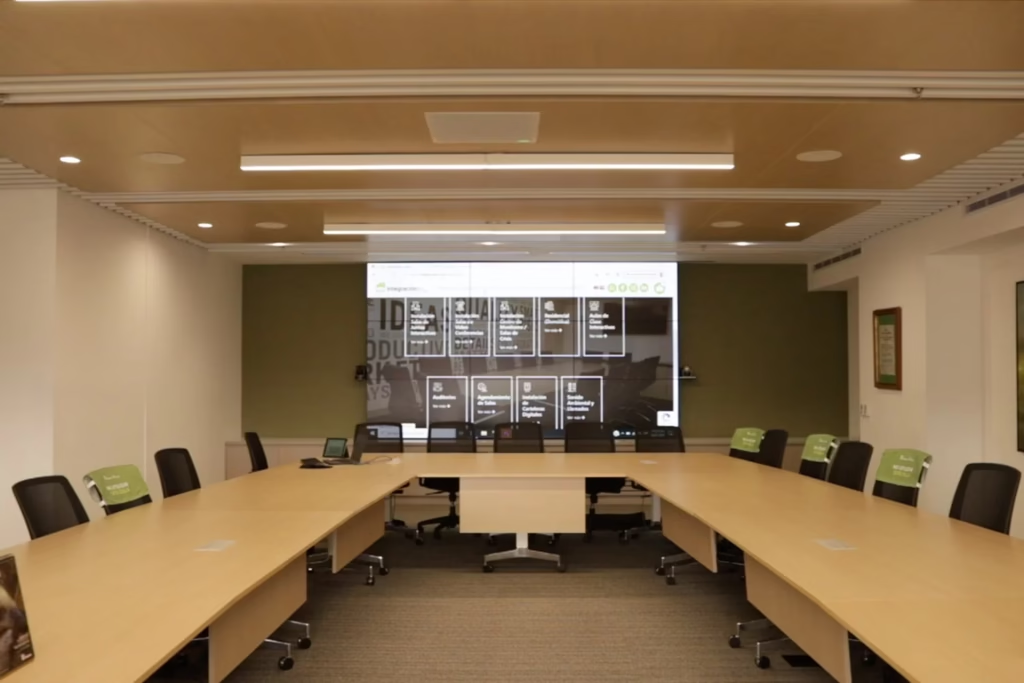
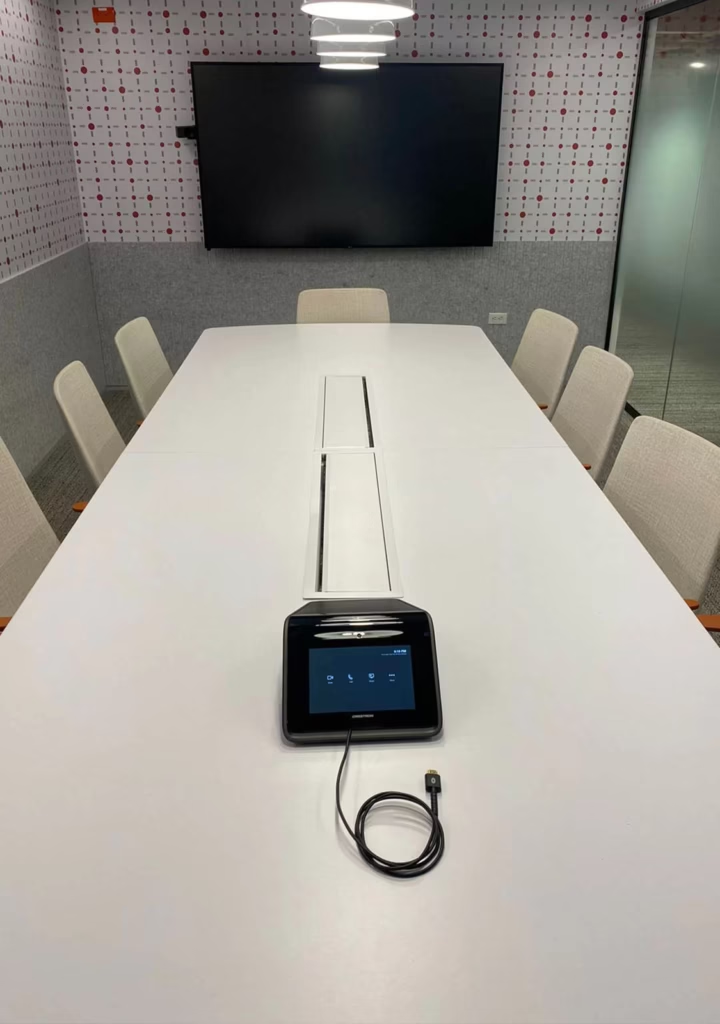
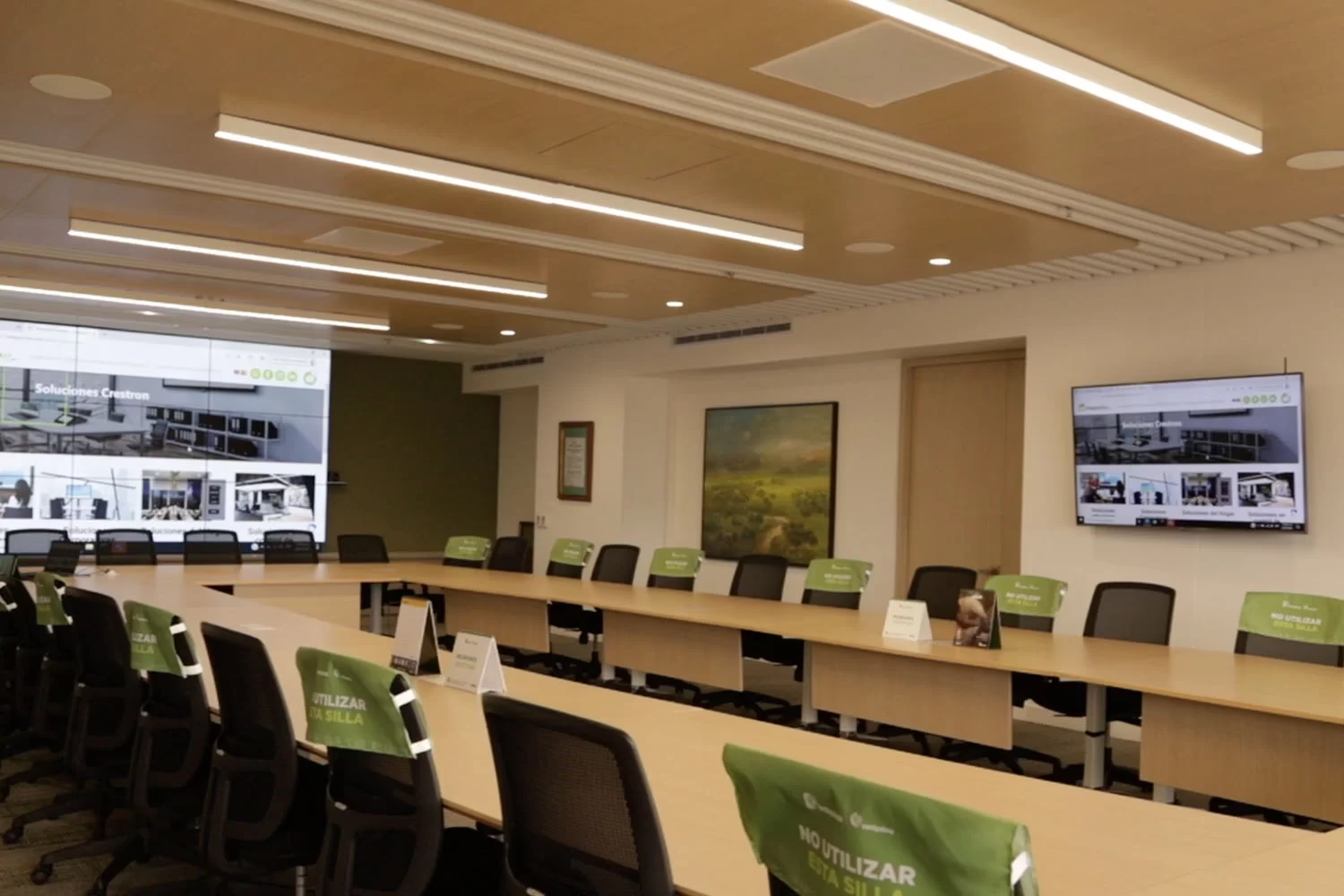
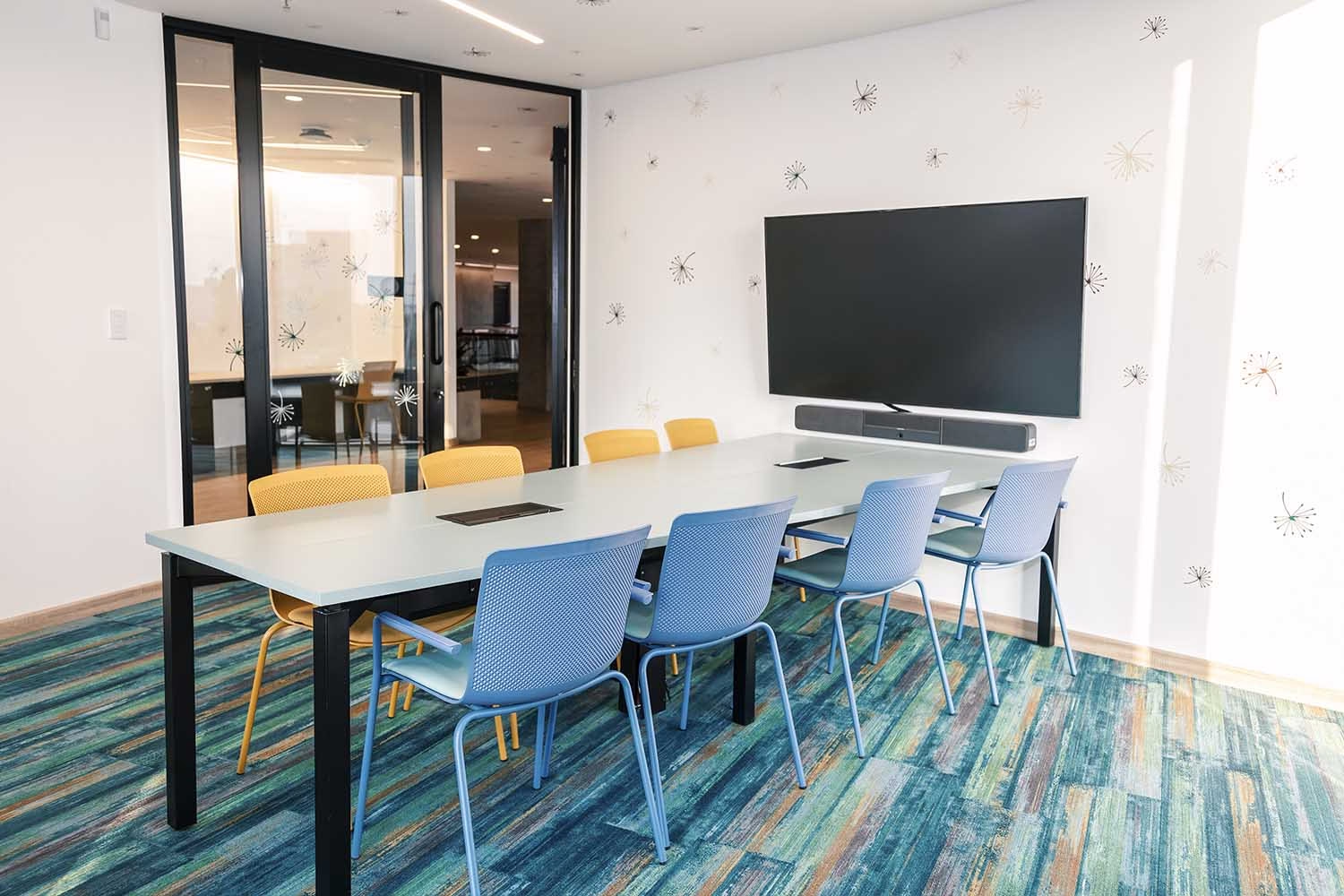
In a company, the boardroom is used by anyone: an executive, a visitor, or a team joining a video call with no time to spare. That’s why the technology has to fade into the background, and the meeting has to start with one touch, with no technician on standby.
We work with multinationals and private companies renovating their offices, with office builders, and with buildings pursuing LEED certification. Each one has its own usage patterns, so we design every room around its real operation, not a single equipment catalog.
Boardrooms and meeting rooms, video conference rooms, auditoriums and divisible rooms, room and desk booking, zoned background sound, and digital signage. All of them can run on the same control platform, such as Crestron, to manage the spaces from a single system. When the room needs a bigger format, the immersive boardroom adds an LED screen or video wall, projection, audio, and control.
If you want the process in detail, the smart boardroom installation guide walks through every stage, from the assessment to the handover.
The project usually goes through Facilities, IT, and Procurement, and often the architect or the general contractor. We deliver a proposal with drawings, a schedule, and a support model that each department can review from its own angle.
A well-integrated corporate room turns on with one touch and shuts itself down when nobody’s using it.
Companies renovating boardrooms, auditoriums, and scheduling systems at their offices in Colombia.
New builds and renovations that need the AV design documented from the planning stage.
Systems with automatic shutdown and zone control, aligned with sustainable construction and the reuse of equipment in good condition.
The Facilities manager, the operations or IT director, with Procurement as the second point of contact.
The same room standard in Bogotá, Medellín, and the rest of the country, with our own technicians and partners.
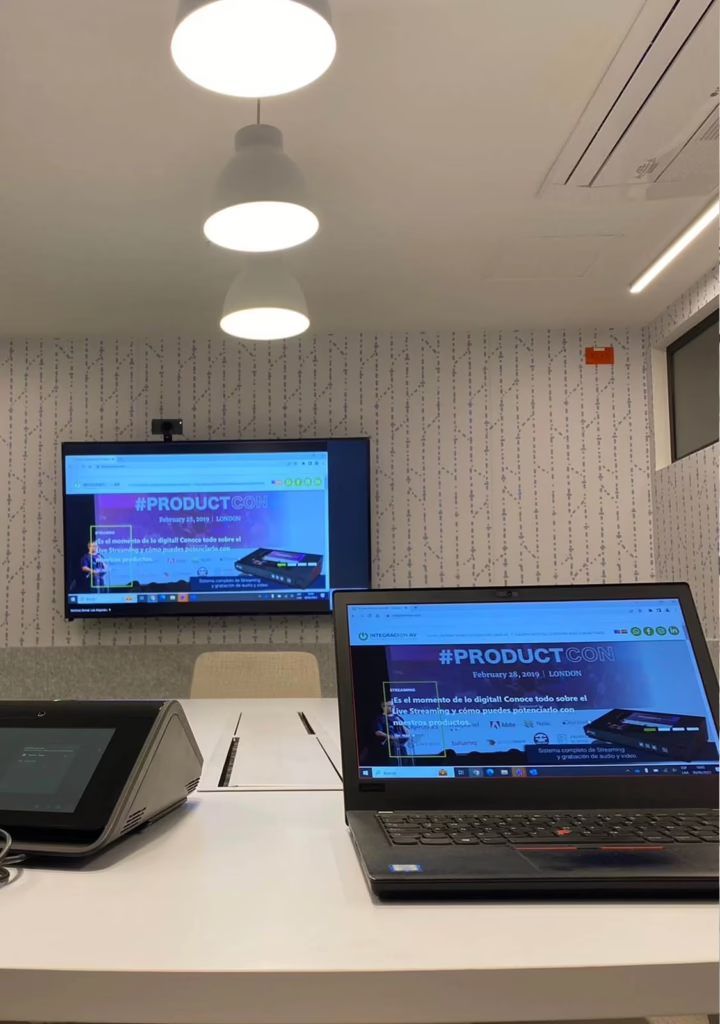
In a company, projects rarely start because equipment is missing: they start because what’s already there doesn’t work as it should. Rooms nobody knows how to turn on, systems that don’t integrate, equipment left on all day, and vendors with no after-sales support slow down meetings and drive up the cost of operations. Each one gets solved in the design, before equipment is purchased.
Separate controls for screen, audio, and video call that delay every meeting and reduce how much the room gets used.
Equipment from different vendors and eras, with no common standard or central control.
Screens, projectors, and audio left on unnecessarily, with no automatic shutdown or zone control.
Reserved rooms nobody uses, and double-bookings for lack of a visible booking system.
Vendors who sold the equipment and don't respond when the room fails right before an important meeting.

Screen, audio, camera, lighting, and shades coordinated by a control that turns the room on with one touch.
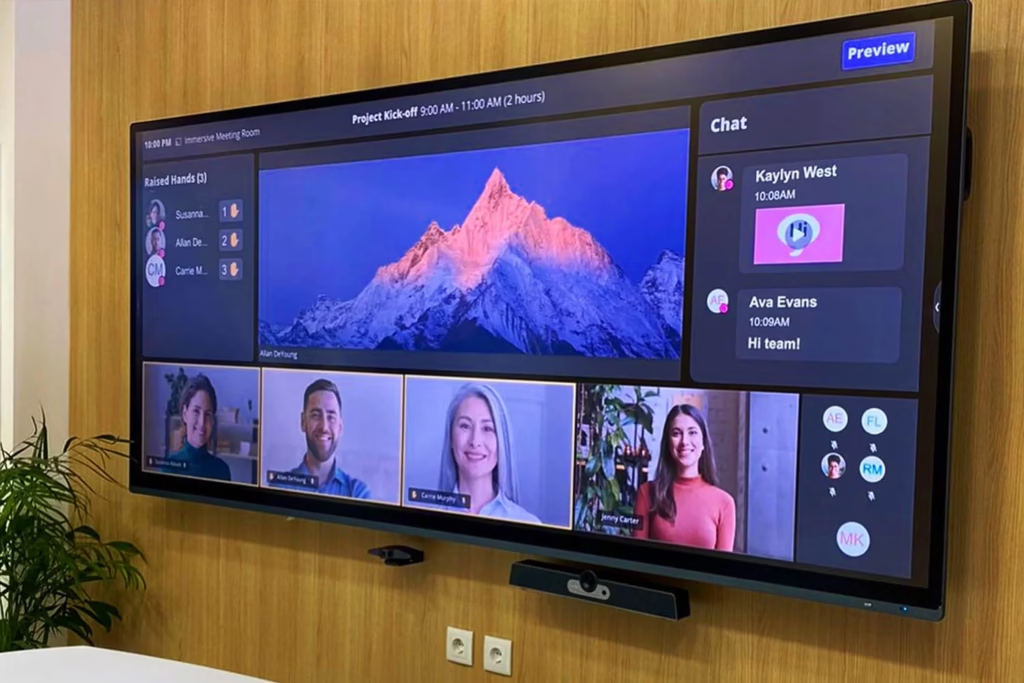
Cameras, microphones, and conferencing systems so the meeting looks and sounds right, in the room and on the other end of the call.
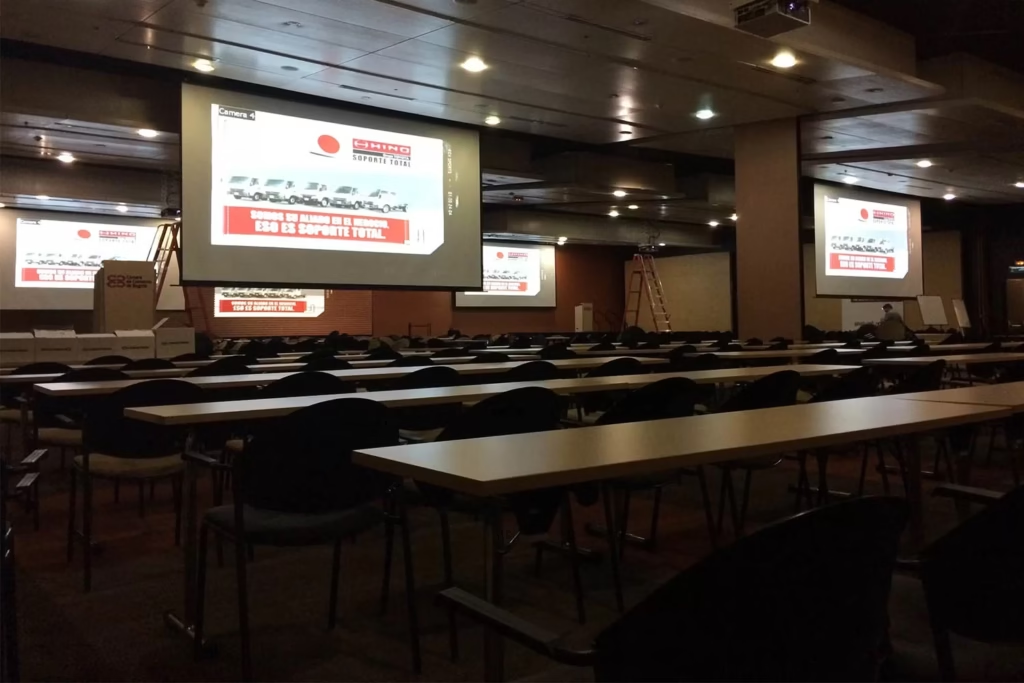
Large-format projection, LED screens, professional audio, and lighting for events, training sessions, and divisible rooms.
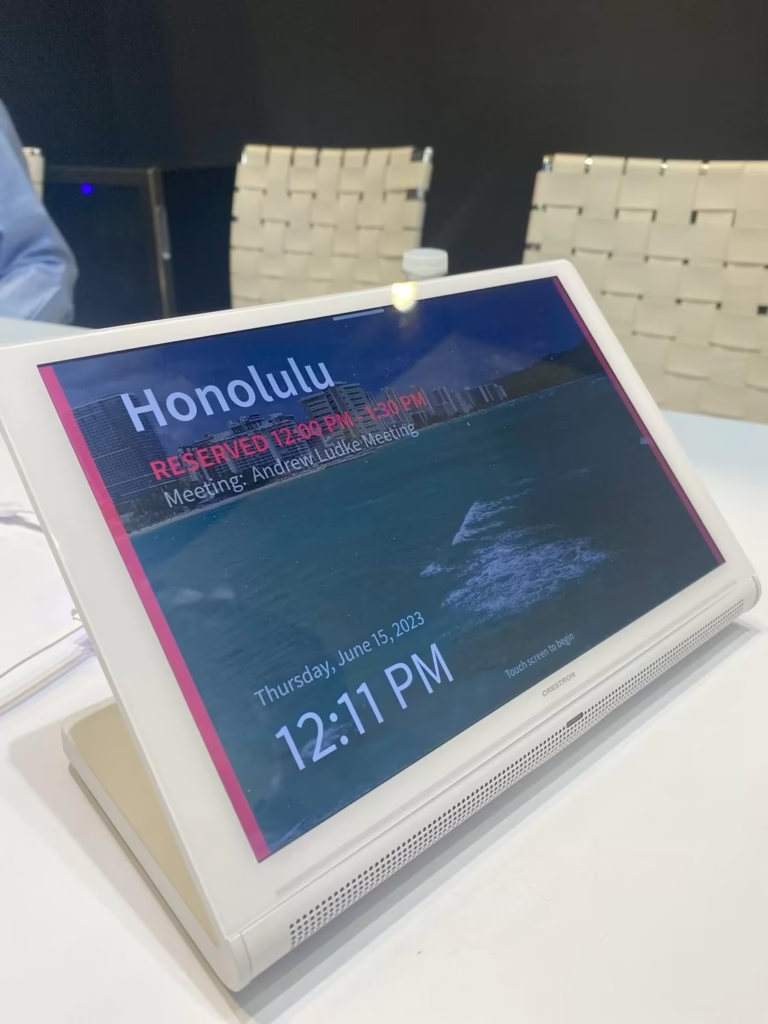
Entry screens for every room and integration with corporate email to book, release, and see occupancy.

Zoned audio with ceiling and wall speakers for offices, reception areas, and common spaces.
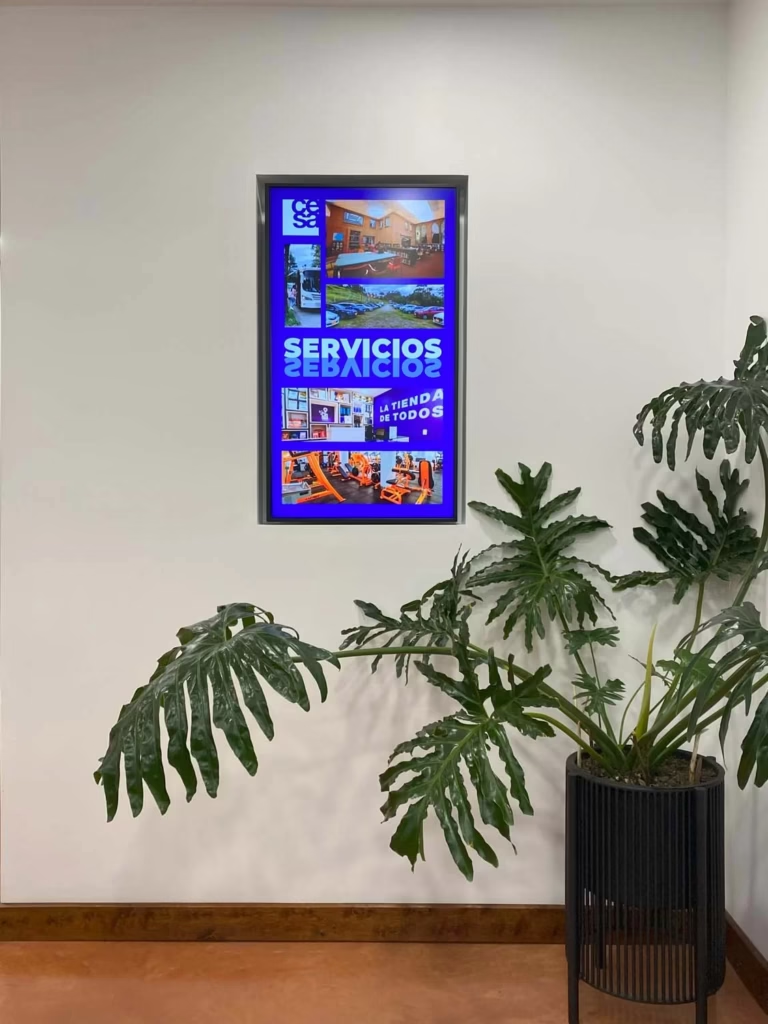
Screens with programmable content for reception areas, hallways, and internal communication.
Tell us about the space and your estimated date. A specialist replies during office hours.

The companies that come to us usually have rooms with equipment from several generations, meetings that start late due to technical issues, and no way to tell which room is free. Many projects arrive alongside an office renovation or relocation.
Among our published projects are corporate meeting and technical-training spaces at the pharmaceutical company Pfizer, and academic and corporate spaces at CESA with room and auditorium integration. All of them follow the same logic: unified control, one-touch operation, and support after handover. See our success stories.
At sites with several rooms, it’s worth defining a standard by room type, so users find the same controls everywhere and support stays simple.
The same team designed the education project that received the AV Awards Americas 2025 and the CALA Awards 2024. We hold AVIXA’s CTS certification and Crestron Master Gold certification. We’ve been integrating spaces in Colombia since 2006.
If your question isn’t here, write to us: a specialist replies during office hours.
The first conversation is a technical consultation: we review your spaces, how they’re used, and which equipment can be reused. From there we prepare a proposal with drawings, an installation schedule, and a support model.
If your project is in the construction stage, it’s worth talking before the electrical and network drawings are finalized. We serve corporate offices in Bogotá and Medellín, and in the rest of the country with our own technicians and partners.
You can also message us on WhatsApp or call +57 301 656 9858.
A specialist replies during office hours, Monday to Friday, 8:00 AM to 6:00 PM (Colombia time).
Replies during office hours.

