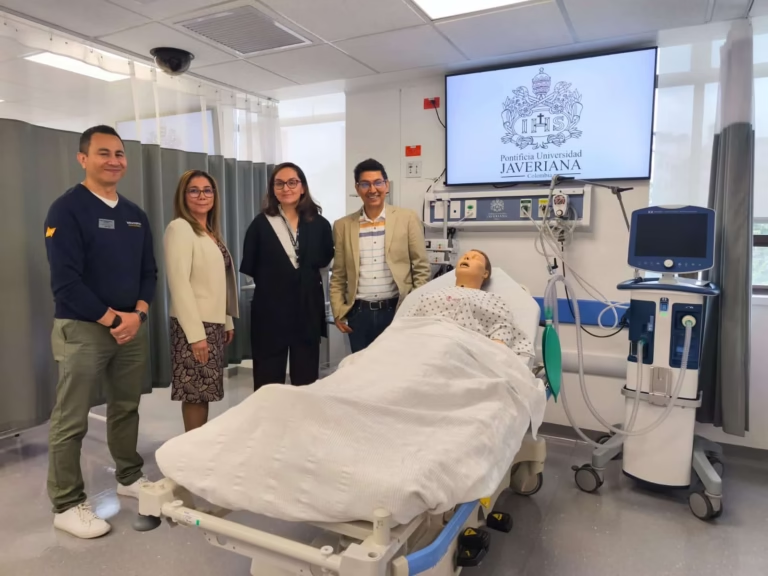

When we talk about audiovisual technology, we almost always think of boardrooms, auditoriums, or events. But there are projects where a camera, a microphone, or a screen stop being communication tools and become part of the training of those who, tomorrow, will hold a patient’s life in their hands. That’s exactly what we achieved together with Pontificia Universidad Javeriana in Bogotá, in a project now recognized as one of the most innovative in the audiovisual industry in Latin America.
The challenge: unifying two disciplines in a single digital ecosystem
Since 2007, Javeriana was a pioneer in Colombia, opening a joint Clinical Simulation Center for its Medicine and Nursing schools. Nearly two decades later, the university set out to take that space to another level: fully modernizing it so students from both disciplines could learn to work as a team the way they would in a real hospital, with the highest possible fidelity to an authentic clinical environment.
The challenge was significant. It meant transforming a full floor — consultation rooms, critical care areas, operating rooms, observation rooms, and a central monitoring room — into a fully digitized complex, capable of operating simultaneously across twenty specialized spaces with capacity for 223 people between students and faculty.
Our solution: audio and video over IP, built for the teacher, not just the installer
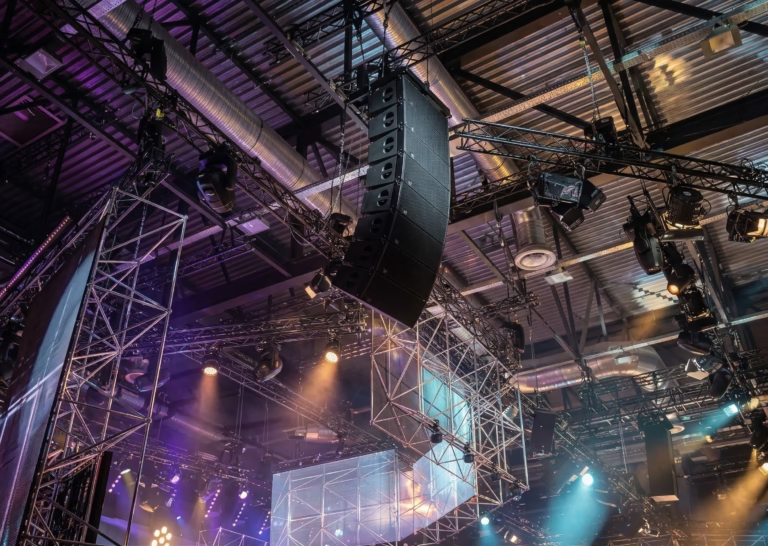
At Integración AV we designed and implemented an audio and video over IP (AV-over-IP) infrastructure that connects cameras, microphones, and screens on a network, letting faculty observe, record, and give feedback on every clinical practice session in real time. We integrated global brands such as AREC, Shure, Crestron, Epson, and Netgear, and used the Dante protocol to ensure audio transmits without distortion — a critical factor when every word during a simulation can make a difference in learning.
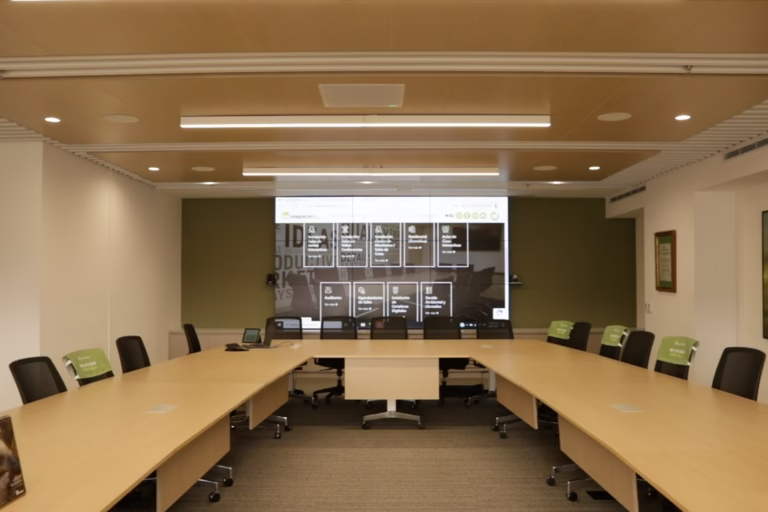
But the most sophisticated technology is useless if the person using it every day can’t operate it. That’s why the whole system is controlled from simplified touch interfaces, designed so faculty with no technical background can manage recording, select camera angles, and play back clinical variables on the simulators with no friction.
The entire project was carried out under AVIXA (Audiovisual and Integrated Experience Association) international standards, covering everything from correct screen sizing to rack design and structured cable labeling. That level of technical rigor is precisely what ensures a center like this runs reliably for years, not just on opening day.
The result: a space that replicates reality to reduce risk
Today, Javeriana’s Clinical Simulation Center lets Medicine and Nursing students practice procedures on high-fidelity simulators that reproduce vital human functions, while a network of connected cameras and microphones records and streams every session for later review. This reduces the need to expose students to critical procedures on real patients during their first practice sessions, and lets several groups learn from the same simulation at once.
It’s ultimately the goal every well-executed AV integration pursues: for the technology to disappear behind the experience, leaving only the learning. Portafolio covered this story in its article La Pontificia Universidad Javeriana usa tecnología audiovisual para salvar vidas, which highlights that same human impact behind the project.
Industry recognition
The project, carried out between November 2023 and March 2024, has not gone unnoticed by the international AV industry:
- CALA Awards 2024: Best AV Integration Project in Latin America.
- AV Awards Americas 2025: Project of the Year in Learning Environments, in the first edition of this recognition organized by AV Magazine, judged by an independent panel of end users, consultants, and industry leaders.
For this latest award, the jury highlighted three specific aspects of our work: the ability to unify previously fragmented systems into a coherent environment, a design built so non-technical staff can operate the space with ease, and the project’s real impact on the quality of healthcare training.
Why this project matters beyond the awards
Awards are a form of outside validation, but what really drives us is what this center represents: a university that chose to invest in technology not as a luxury, but as a teaching tool that reduces risk and better prepares the people who, in a few years, will handle real emergencies. That’s the kind of project we like to build at Integración AV: infrastructure that barely gets noticed, but changes a great deal.
Is your educational or healthcare institution evaluating modernizing its simulation or hands-on training spaces? At Integración AV we can help you design an audiovisual ecosystem built around your actual needs, not a generic equipment list.
The full project sheet — spaces, brands, photos, and awards — is in the Javeriana Clinical Simulation Center success story.