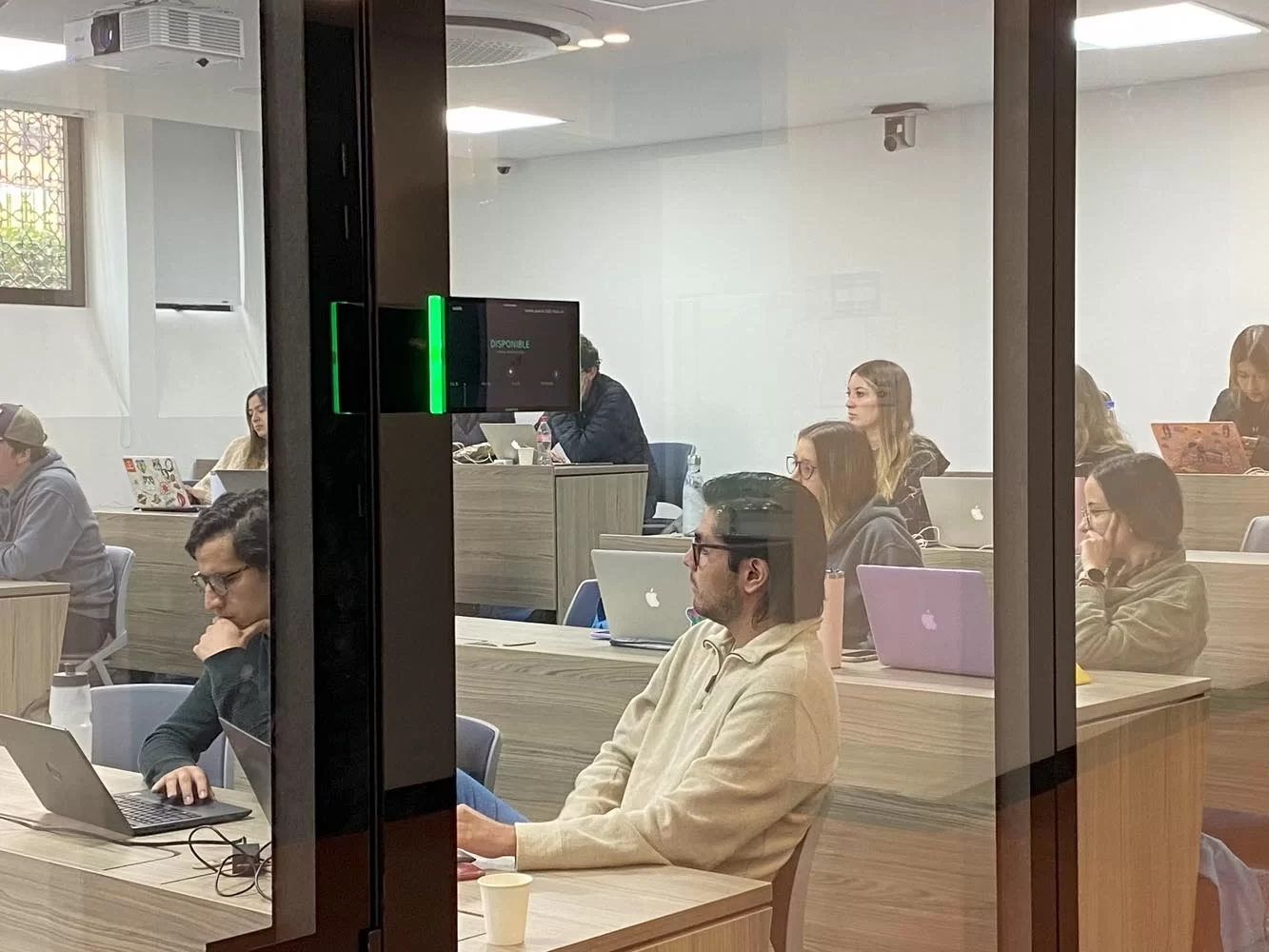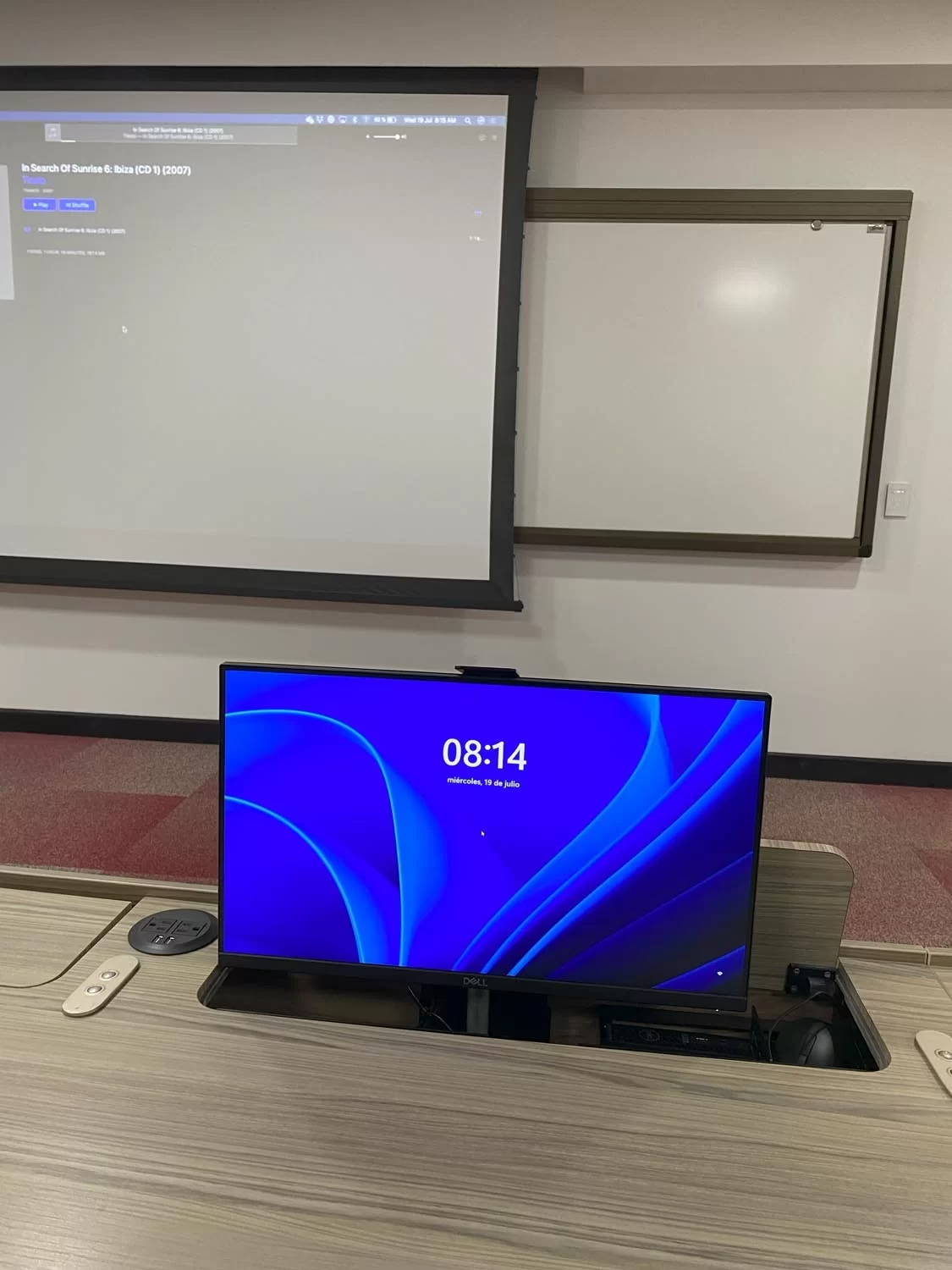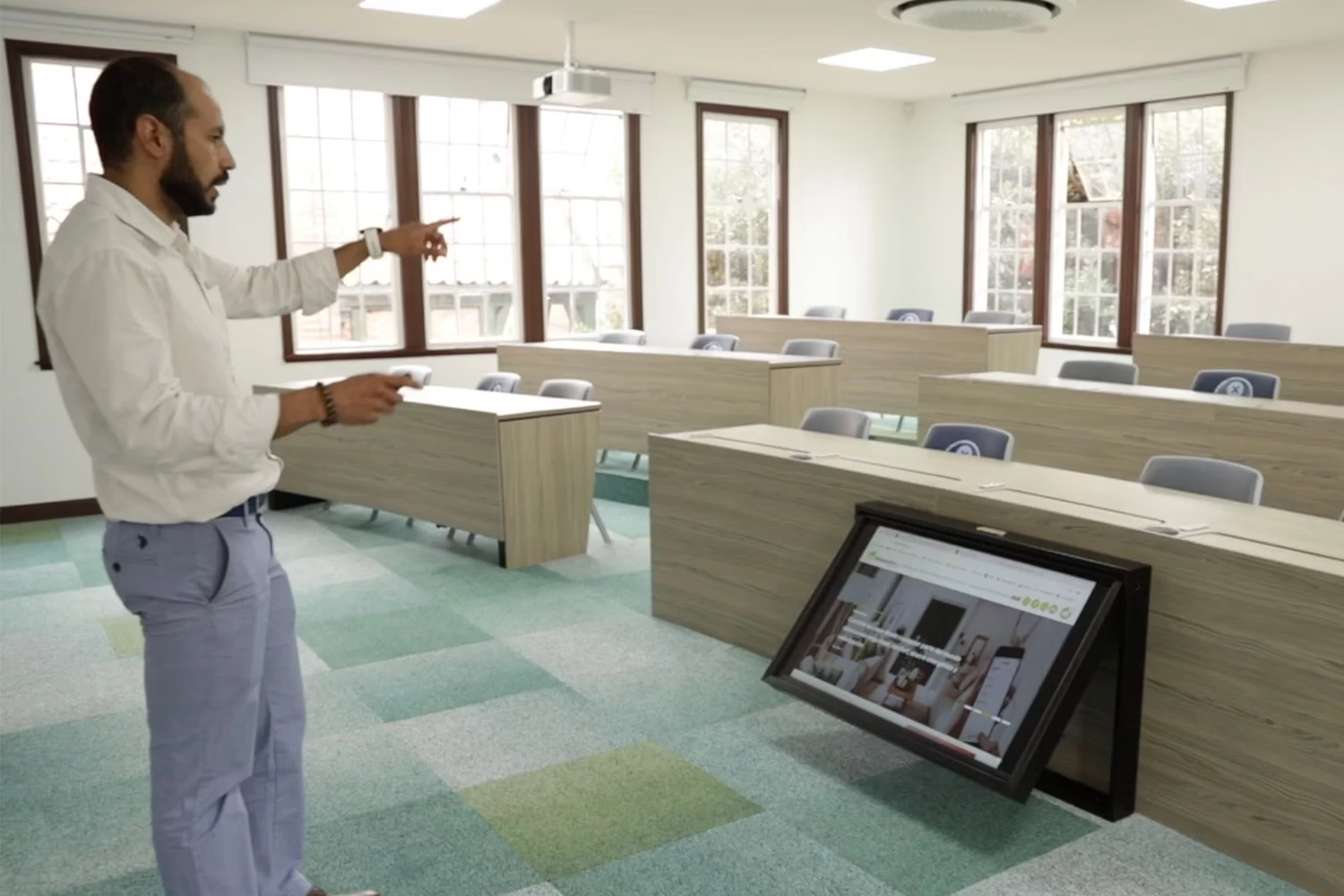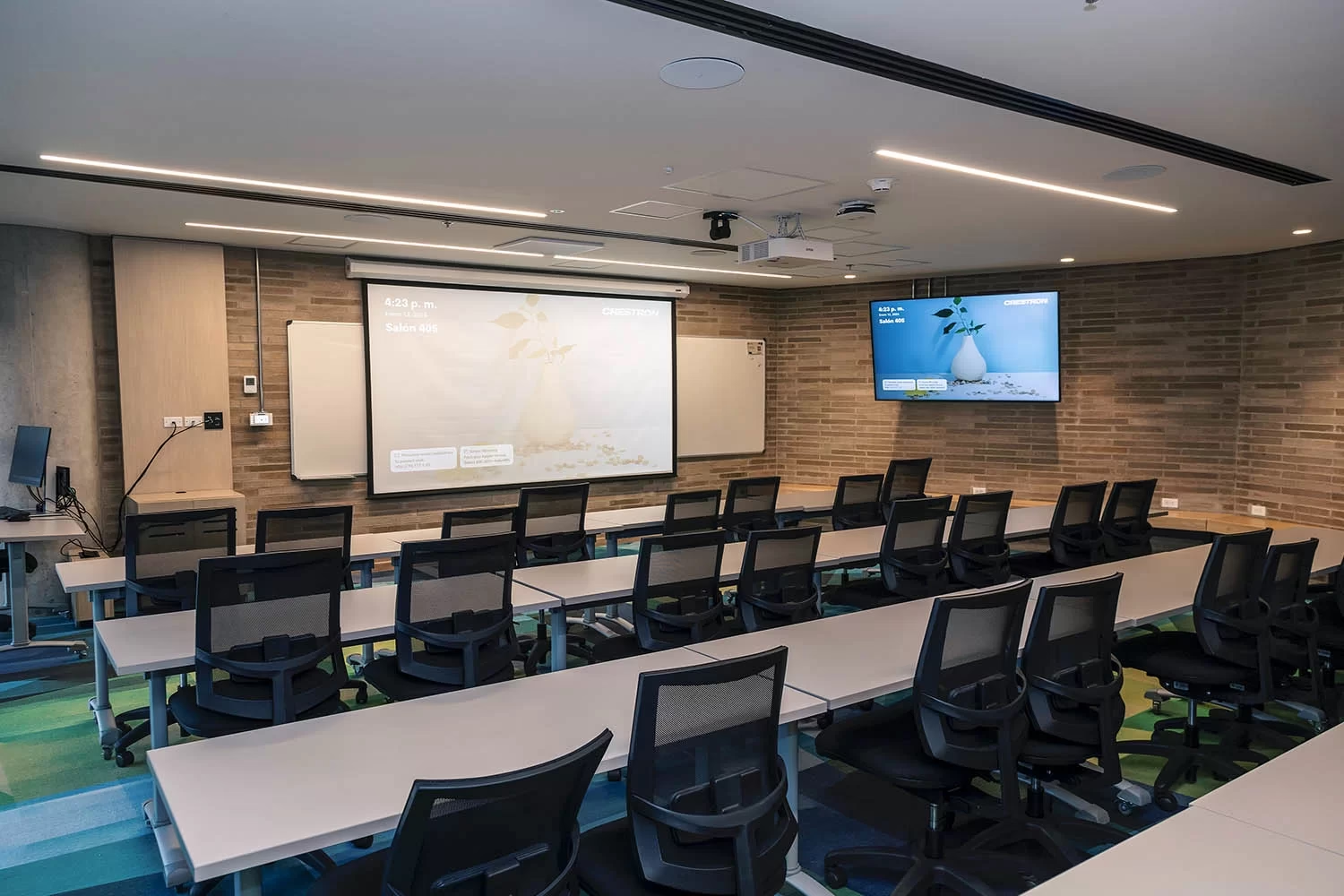
We integrate interactive monitors, smart boards, auto-tracking cameras, and microphones into a classroom ready for in-person, remote, or hybrid classes. We design interactive classrooms for private universities, private schools, and training centers, with educational automation and Crestron programming.


An interactive classroom is a room where the touch board or monitor, the camera, the audio, and the control work as a single system. The teacher presses a button and teaches both the students in the room and the ones connected remotely. It’s used in schools, universities, and simulation centers, and it’s designed classroom by classroom, not from a catalog.
Many institutions have already bought the technology. What’s usually missing is the integration: a board that doesn’t talk to the video conferencing platform, a projector with its own separate control, a microphone the remote student can’t quite hear. The teacher loses the first minutes of every class sorting that out.
Integrating the classroom changes the starting point. Programmed scenes — in-person class, hybrid class, shut down — coordinate the screen, camera, audio, and lighting with a single command, and the teacher doesn’t need to know how to operate each device. Automatic shutdown at the end of the class block cuts consumption in a building with dozens of rooms left on unused.
This page is the complete solution for the education sector: what the project includes, how to choose the board, how hybrid classrooms work, how we deliver, and where we serve. If you’re looking for the guide to a specific component, see the smart whiteboard guide, what an interactive classroom is, technology for medical simulation centers, classroom sound, and what a video beam is.
Size. This is decided by the distance from the last seat to the screen, not by budget. A 30-student classroom with the back row seven meters away needs a larger diagonal than a twelve-seat training room.
Touch and writing. Check how many simultaneous touch points it supports and whether it lets two people write at once. That difference is noticeable in group work; in a lecture, it isn’t.
Software. The board comes with its own system, but what matters is whether it integrates with the video conferencing platform and the virtual classroom the institution already uses. If it doesn’t, the teacher ends up using it as a plain screen and nothing more.
Audio and camera. An all-in-one panel with built-in camera and microphone covers a small room. In a large classroom, audio and camera are separate and integrated into the system, because the panel’s microphone doesn’t reach the back rows.
Mounting and network. We define the power point, network point, height, and type of mount before purchasing. Projects that go sideways are usually the ones where the equipment was bought first and the installation figured out afterward.

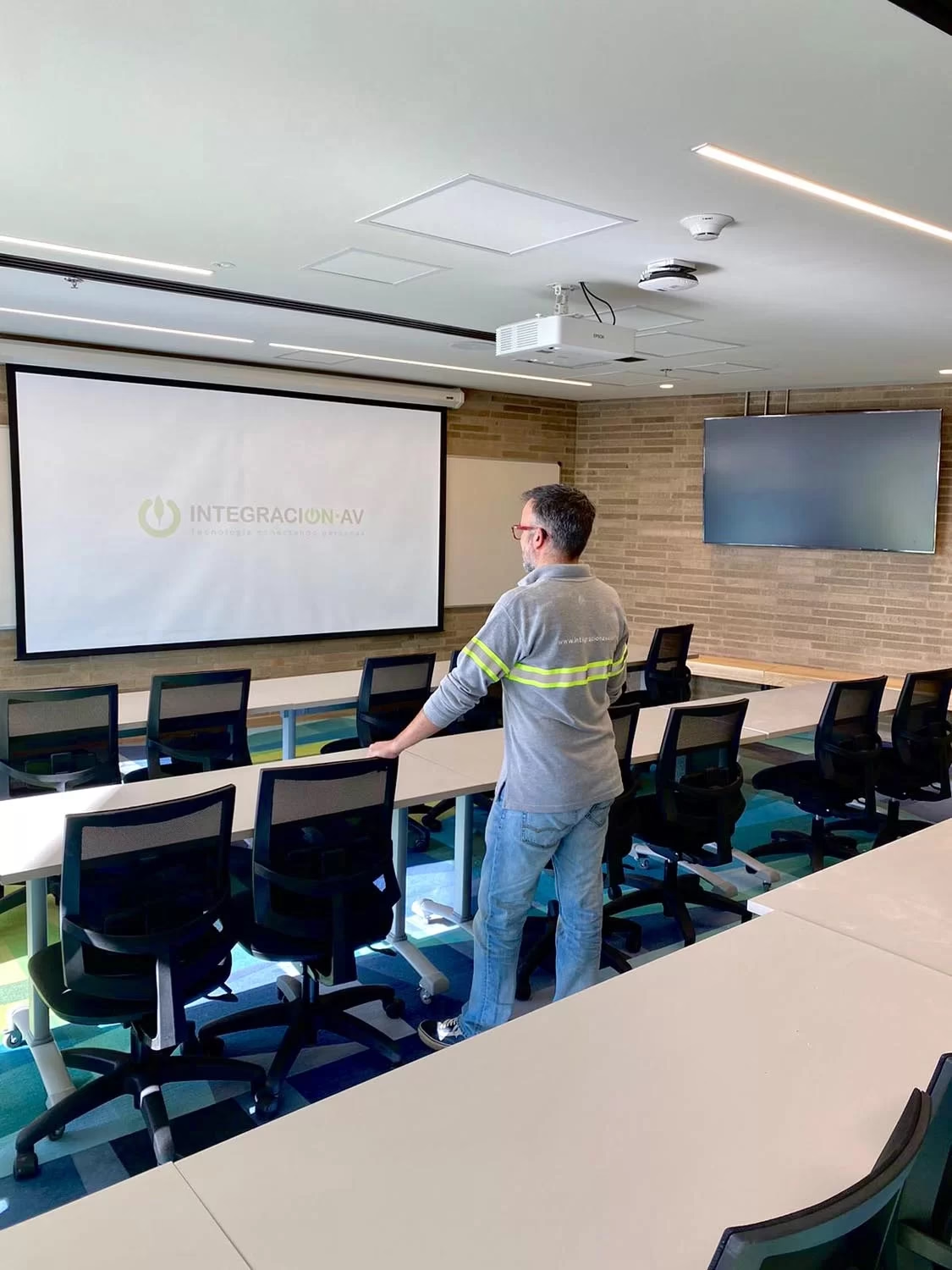
Hybrid classrooms, graduate-level rooms, and simulation centers for higher-education institutions modernizing their infrastructure.
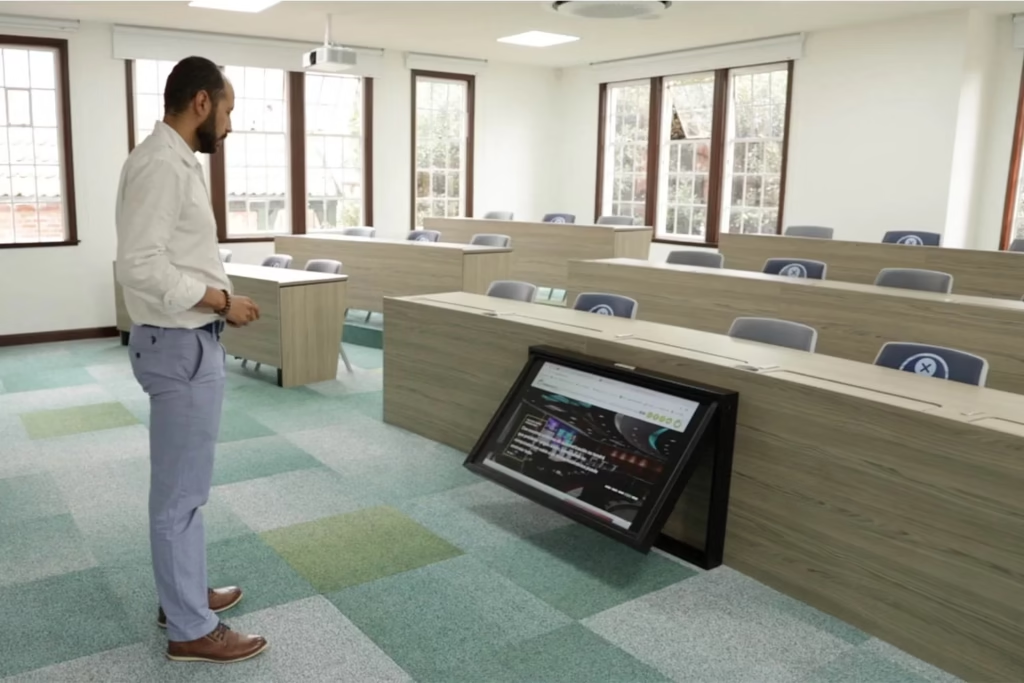
Interactive boards and monitors, classroom audio, and installation designed for the teacher to use without technical support.
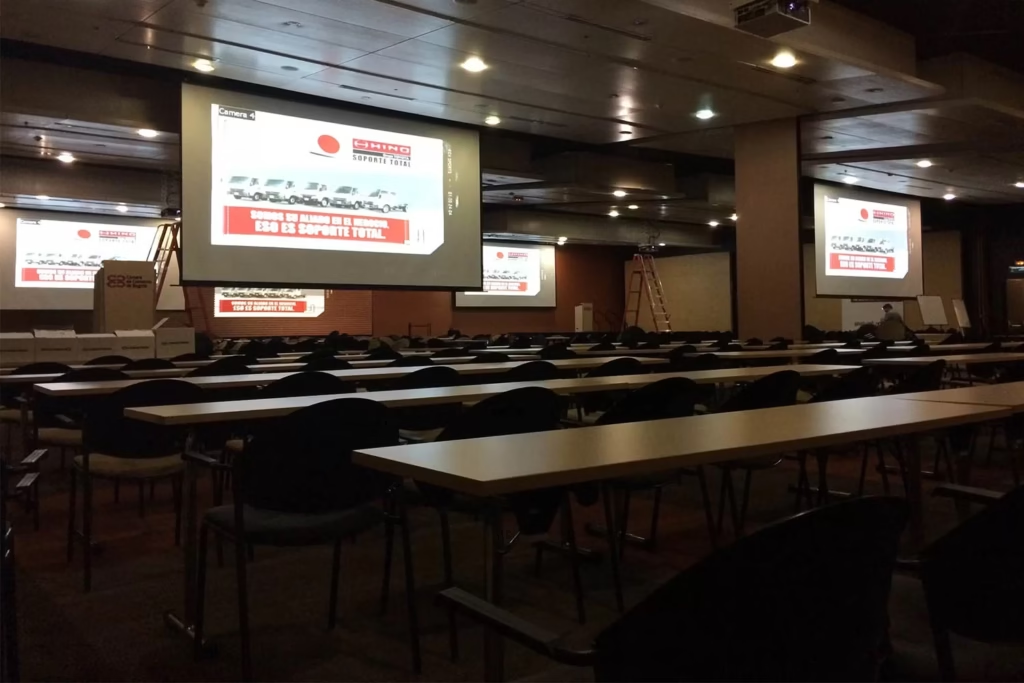
Corporate training rooms with hybrid classes, a tracking camera, and microphones integrated into the room's control.
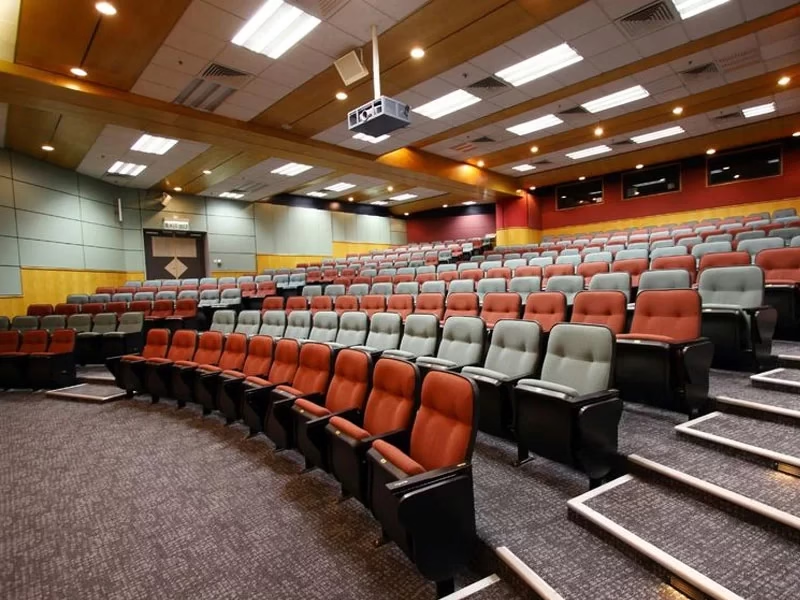
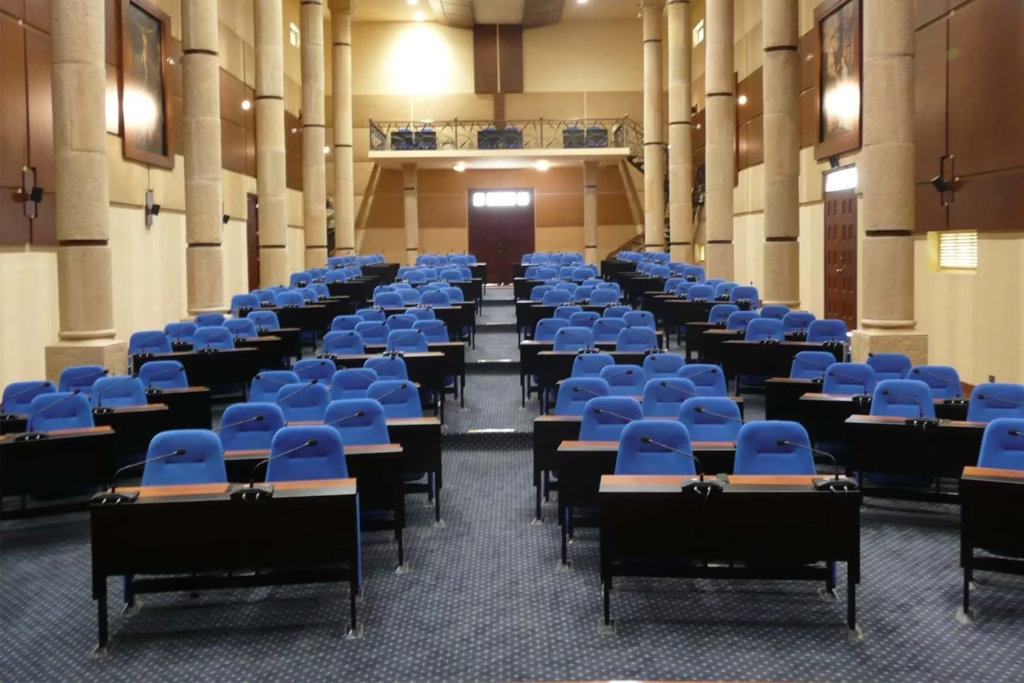
When the space moves from classroom to auditorium, we integrate projection, professional audio, and control for lectures and events.
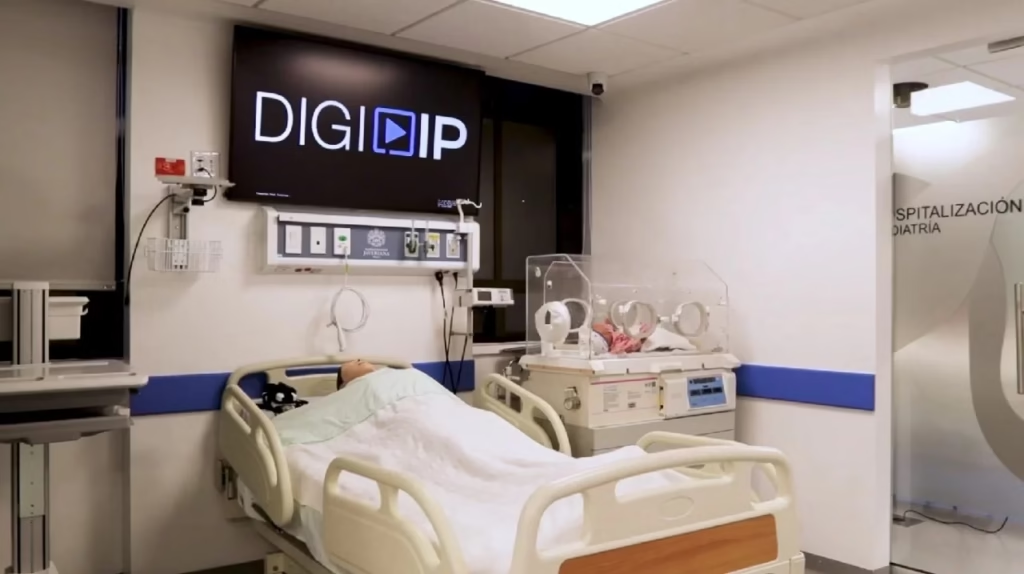
Video capture, audio, recording, and debriefing for health and science programs.

We study the scope of every platform so we combine only what your classroom needs. Crestron Master Gold status, AVIXA's CTS certification, and Crestron Service Provider status back a team that knows what to integrate and what to leave out.
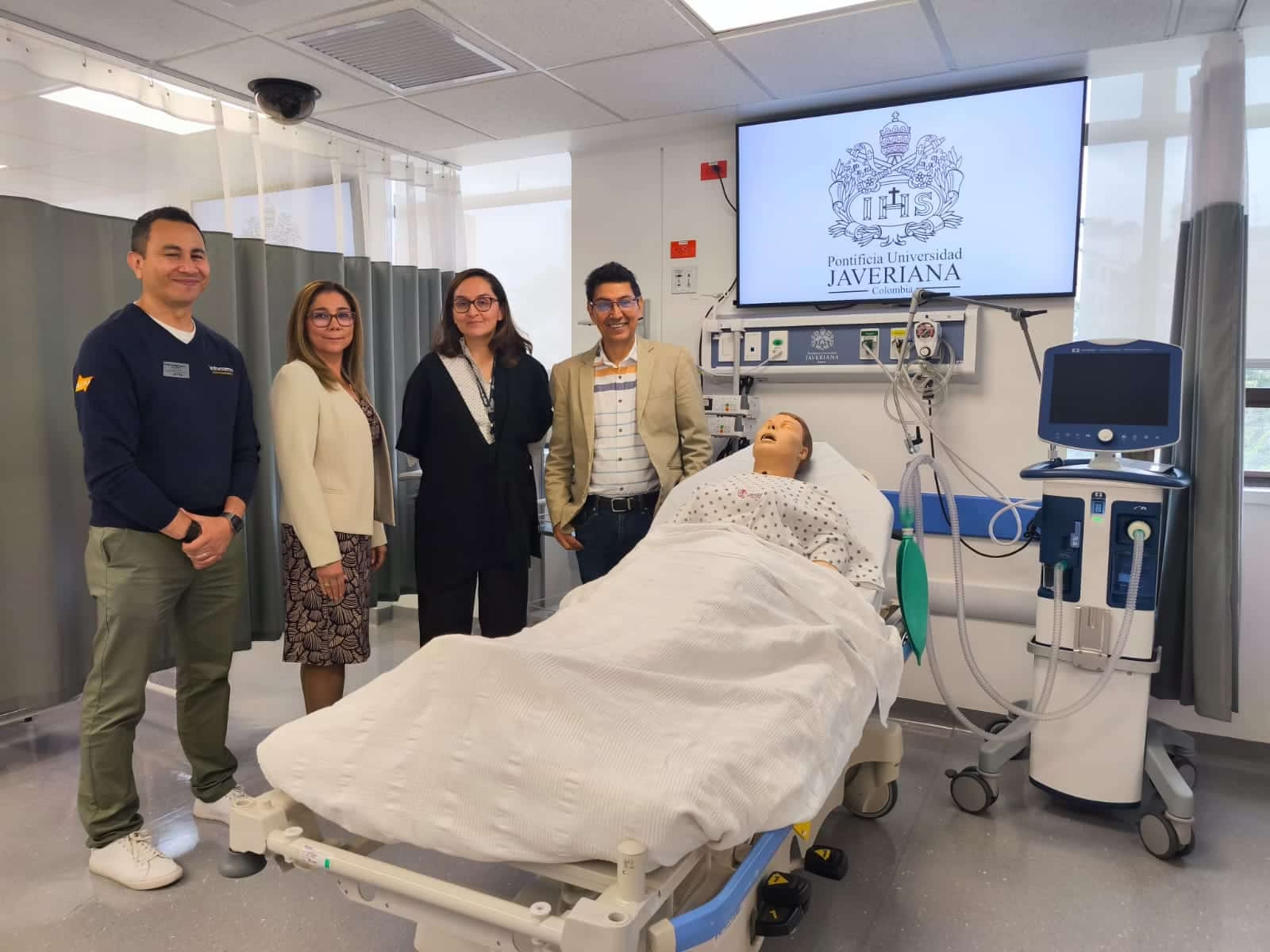
The AV Awards Americas 2025, in the learning-environment projects category, and the CALA Awards 2024 recognize a specific education project: Universidad Javeriana's medical simulation center. These are industry awards, not self-published.
We program shutdown by motion detection and by schedule to cut campus consumption, and we reuse the equipment in good condition the institution already has. Sustainability starts with not replacing what still works. We are part of the AVIXA Sustainability program.
Design, programming, installation, teacher training, and after-sales support with the same point of contact. There's no separate vendor for the boards, another for the programming, and a third for support when the classroom fails mid-semester.
Universidad Javeriana, Bogotá. A multi-space campus project — the Jorge Hoyos Building, Torre Sapiencia, the medical simulation center, and the outdoor screens — with auditoriums, simulation rooms, and screens integrated under one Crestron control layer, recognized with the AV Awards Americas 2025 as Project of the Year in Learning Environments and with the CALA Awards 2024.
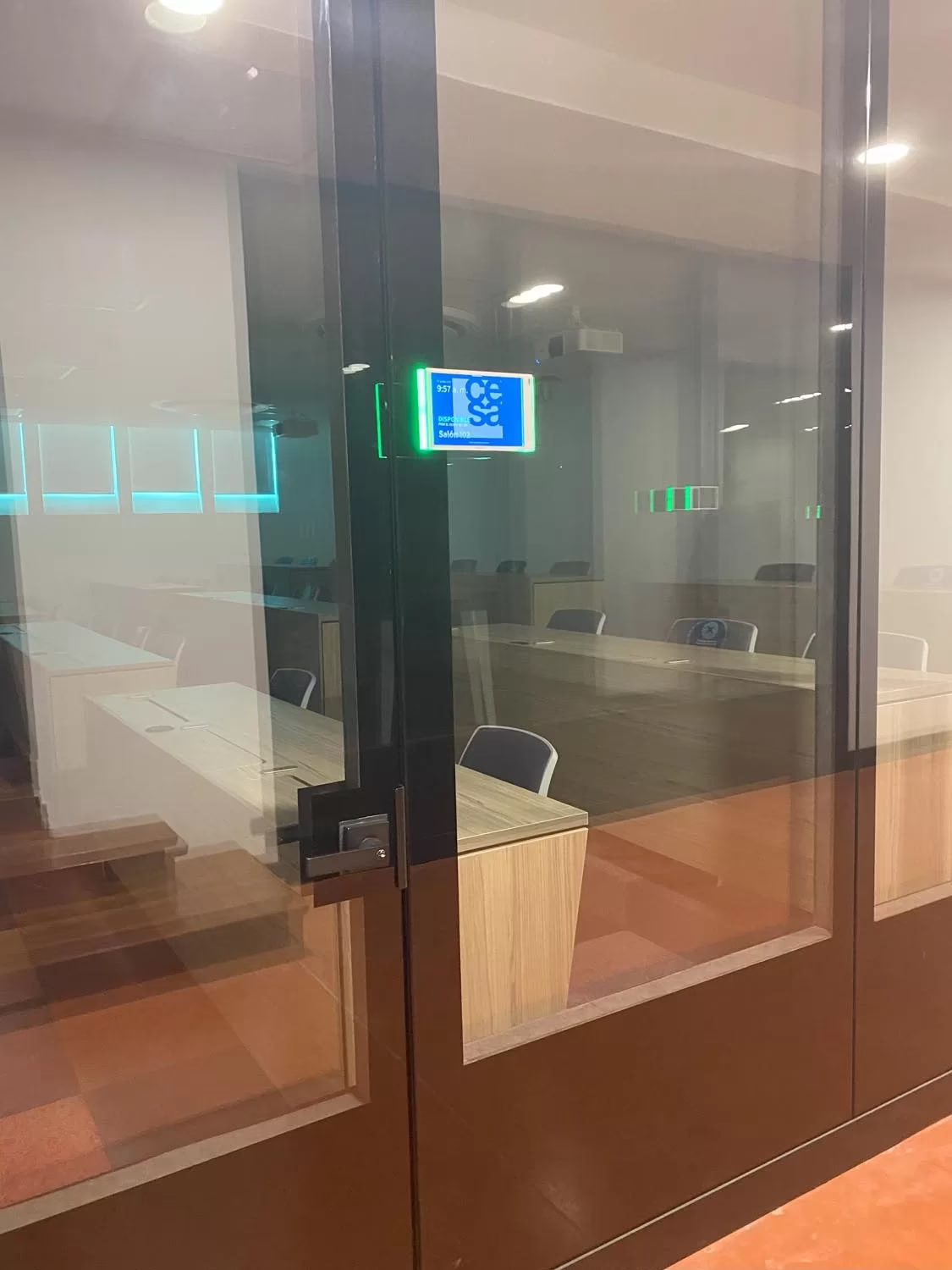
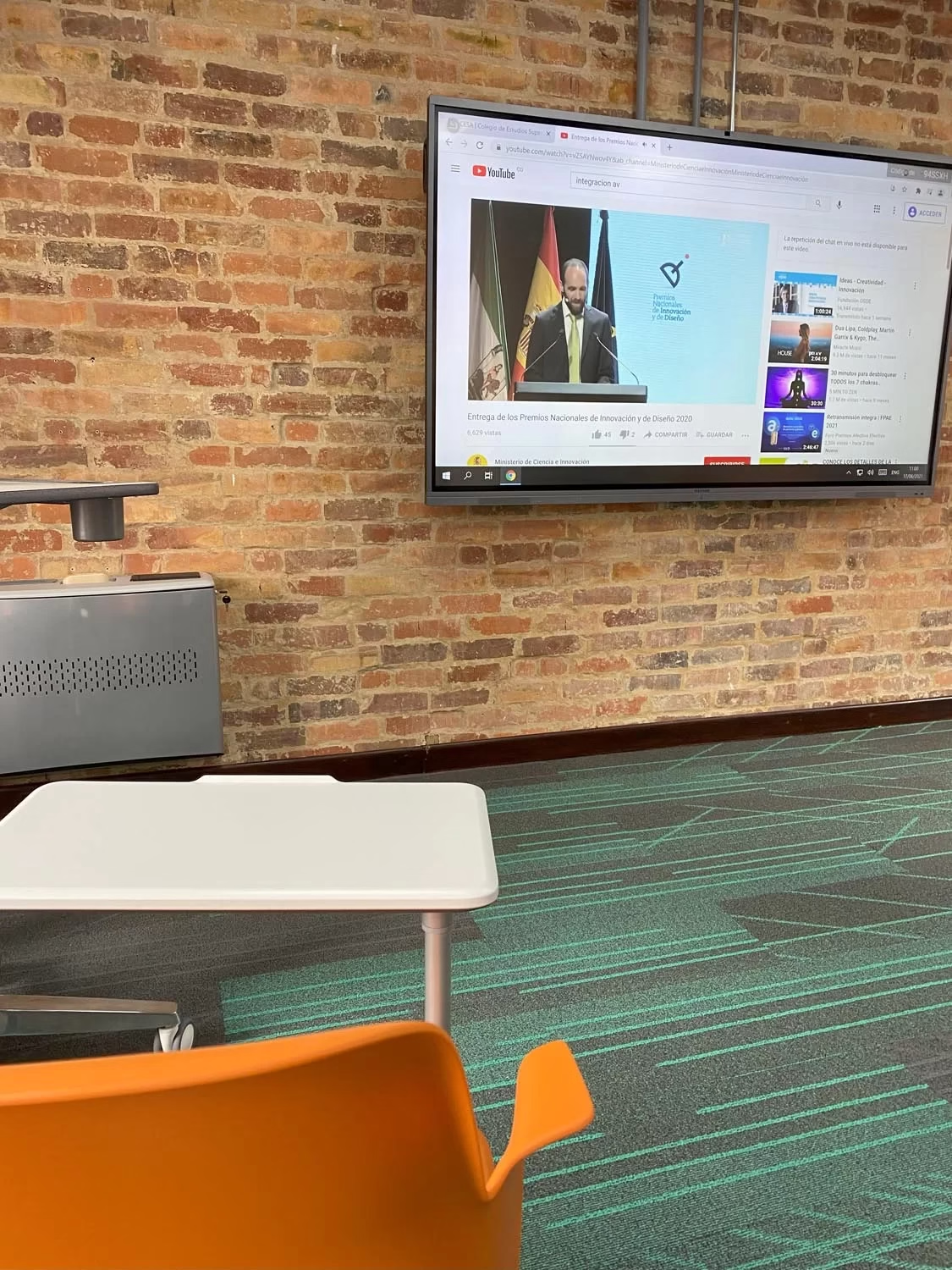
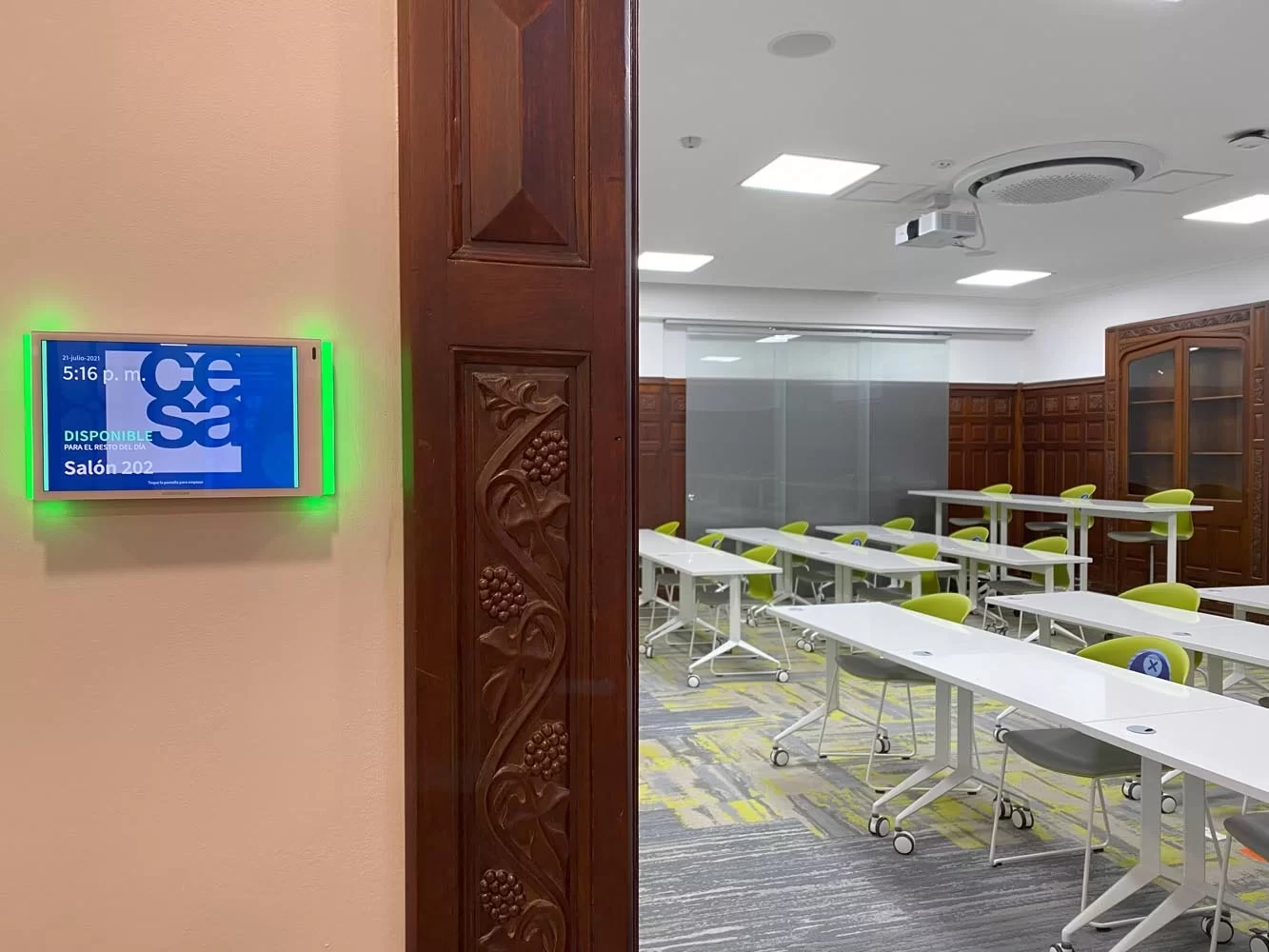
CESA, Bogotá. Academic and corporate spaces with room and auditorium AV integration.
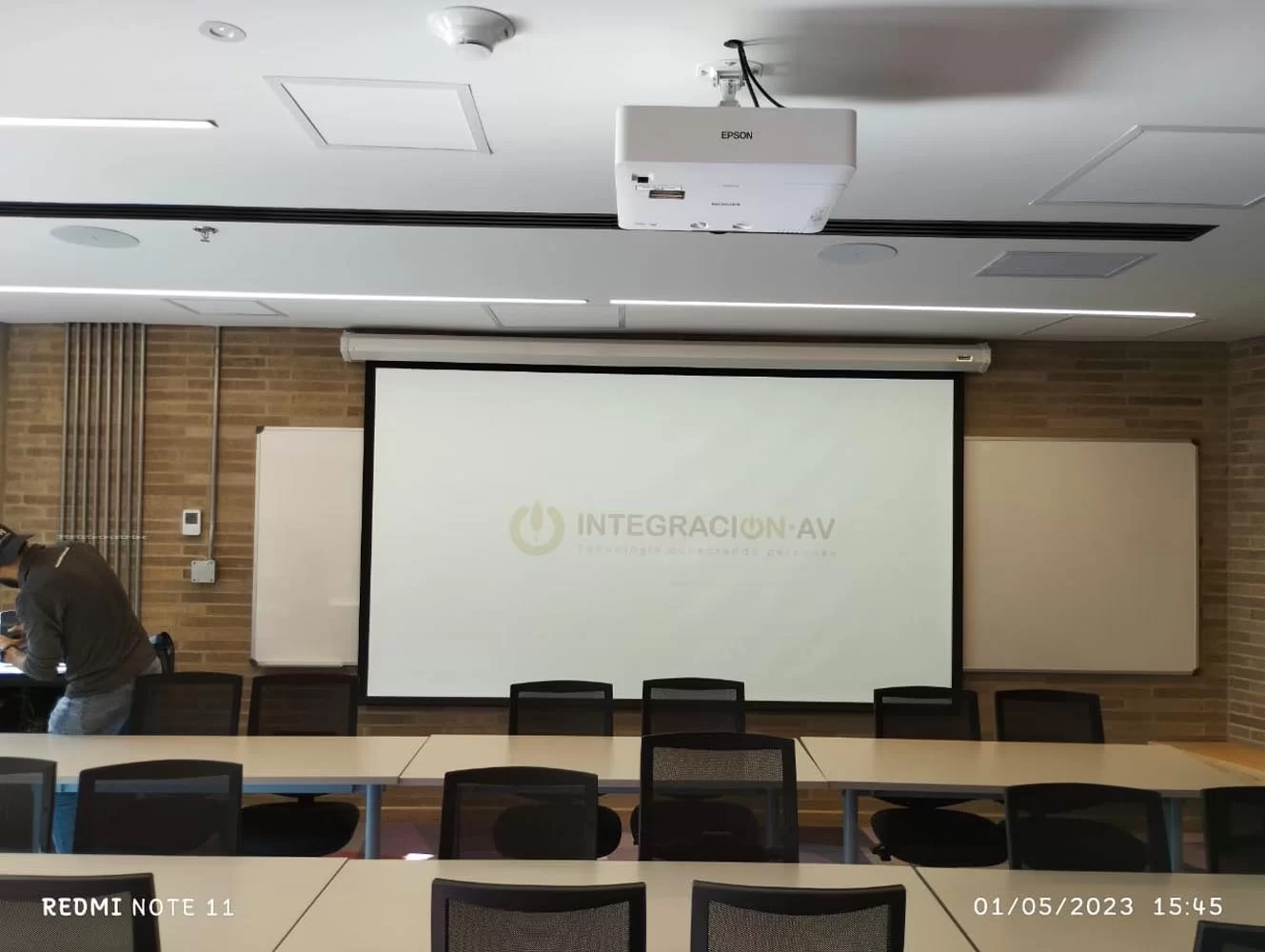
The photographs in this section show classrooms and hybrid rooms equipped by Integración AV at educational institutions across Colombia. Our published projects are in success stories.
Tell us about the space and your estimated date. A specialist replies during office hours.
If your question isn’t here, write to us: a specialist replies during office hours.
Our main office is in Bogotá, at Calle 42 #27A-45, Office 403, and we have an office in Medellín. The education line has national reach: where certified technical partners are available, the installation is carried out with them under our supervision, and where none are available we send our own staff from Bogotá or Medellín.
The first conversation is a technical consultation. We learn what types of rooms you have, how your institution teaches, how many classrooms enter the first phase, and which existing equipment can be reused.
From there we prepare a detailed quote, with scope by classroom type, AV drawings, a schedule aligned with the academic calendar, and an after-sales model.
A specialist replies during office hours, Monday to Friday, 8:00 AM to 6:00 PM (Colombia time).
Replies during office hours.