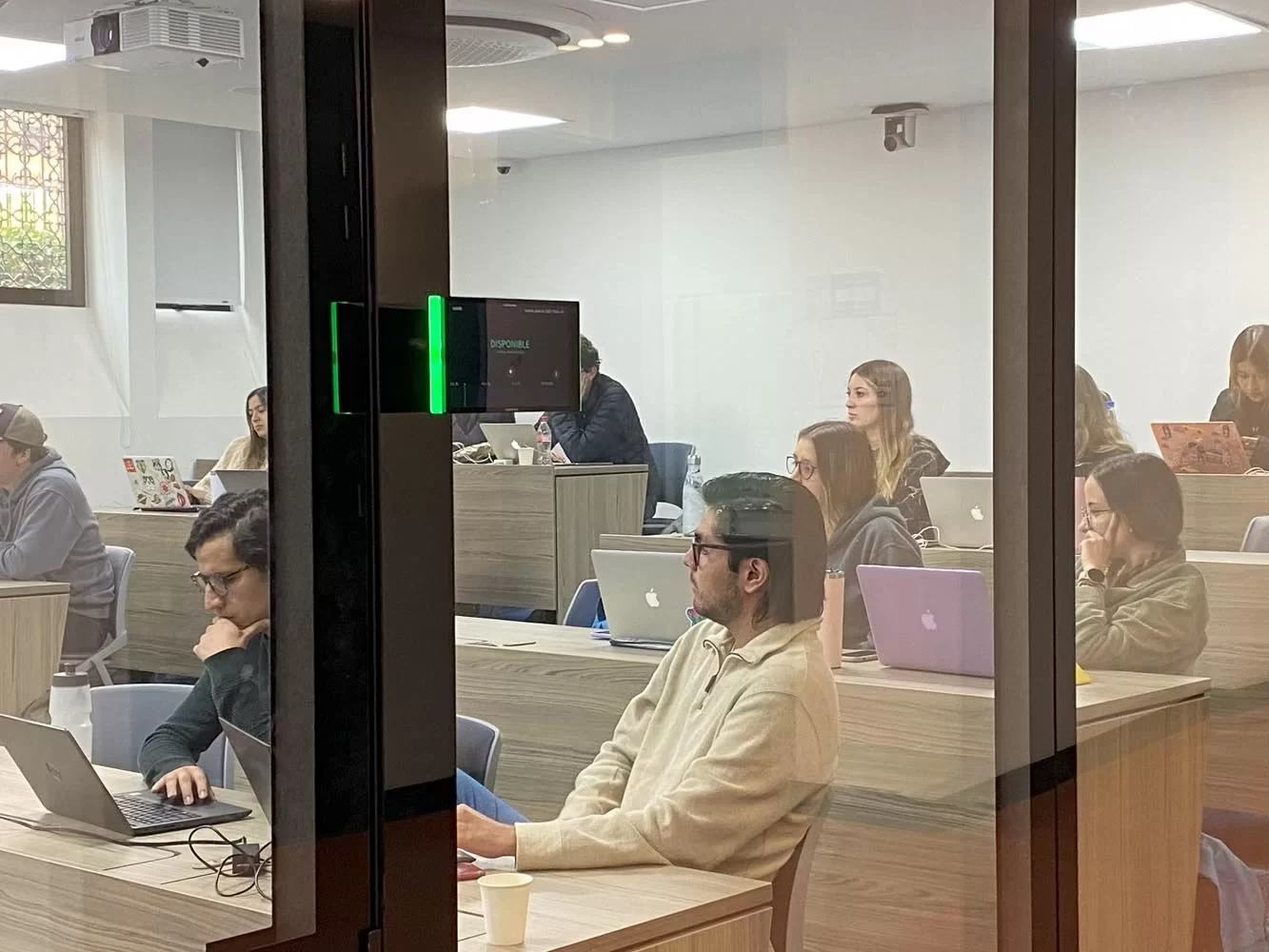
Have you ever wondered what it would be like if your classroom became a hub of innovation, inspiration, and active participation? Now is the time to explore the educational revolution with the concept of the interactive classroom. In the age of connectivity, the challenge for educational institutions is not just to transmit information, but to capture the attention of a digital-native generation that demands dynamism and clarity. A well-designed interactive classroom is the technical and pedagogical answer to this need.
What Is an Interactive Classroom or Smart Classroom?
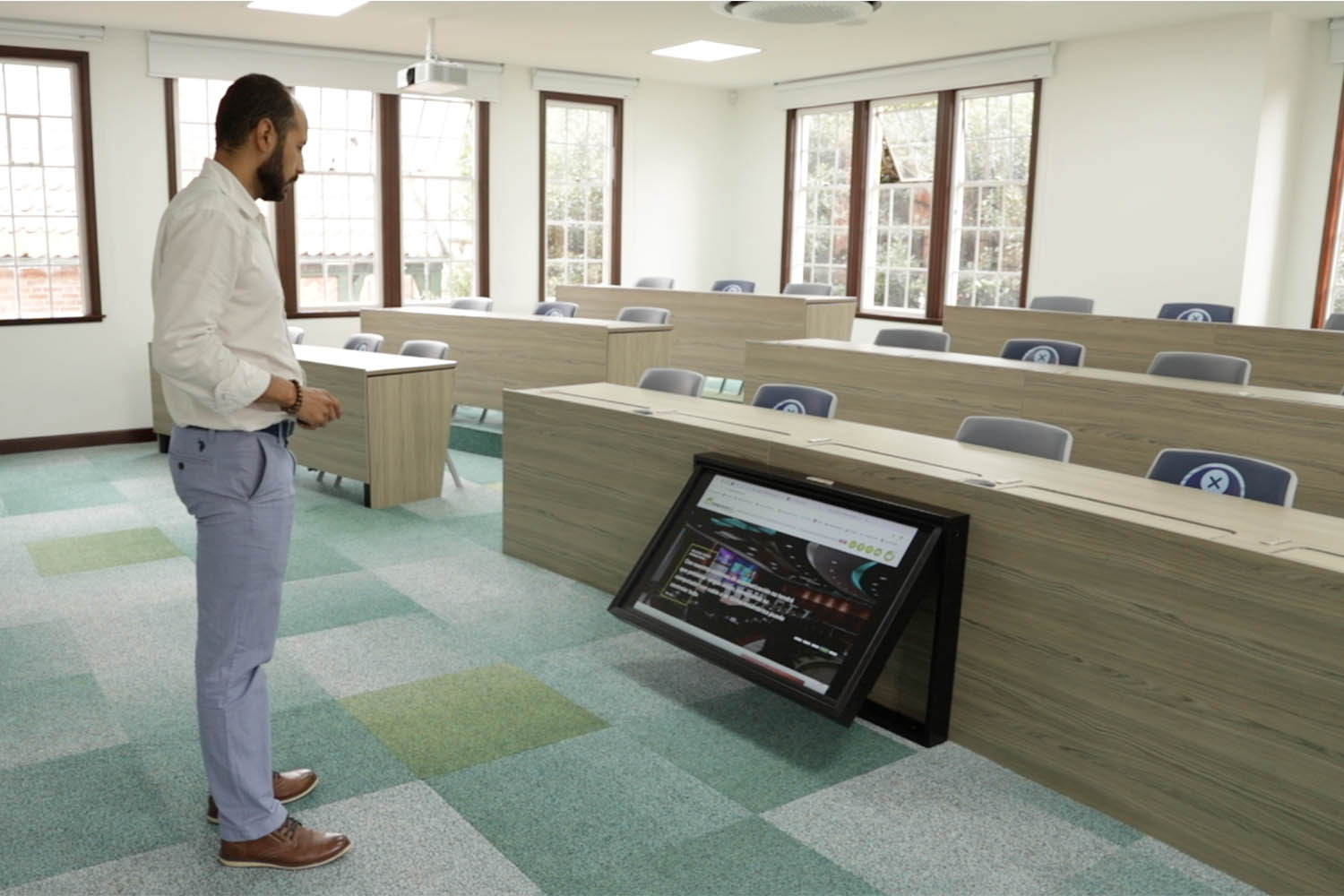
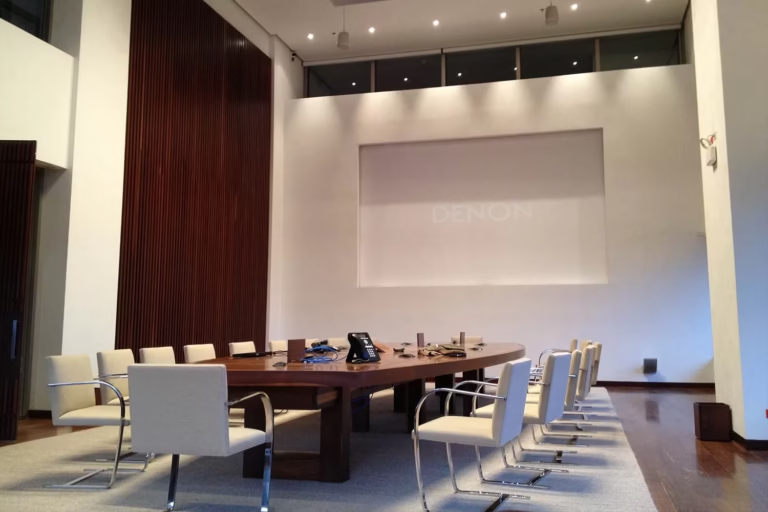
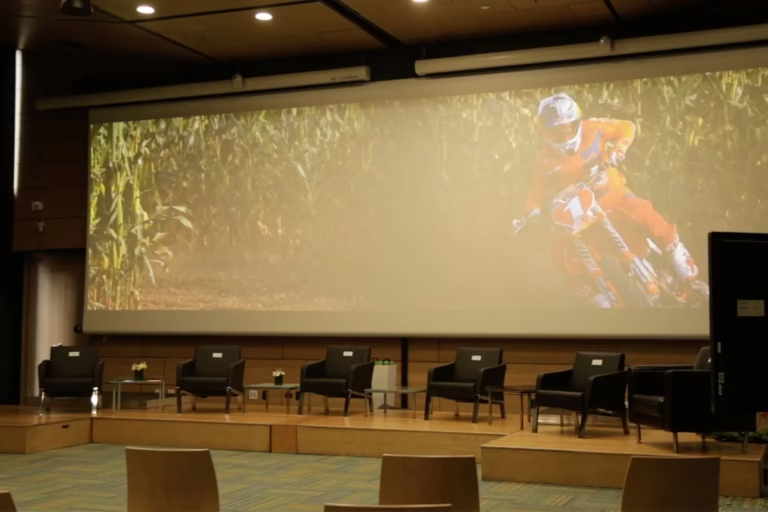
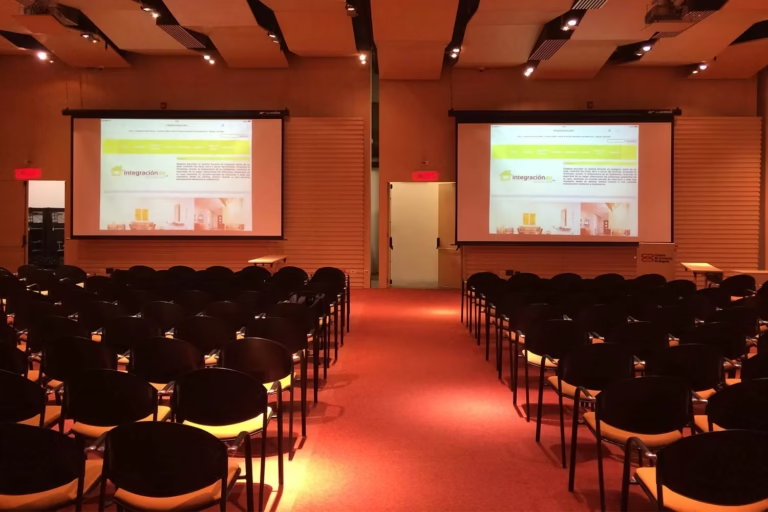
Technically, a smart classroom is defined by the convergence of systems. It is not about isolated devices, but about an audio and video infrastructure where the signal flows between screens, microphones, and cameras. This architecture allows two-way communication, making it possible for knowledge not only to travel from teacher to student, but to be built collaboratively.

Essential Tools in a High-Level Interactive Classroom
For an interactive classroom to compete with global standards, it is essential to integrate professional components designed for these spaces. Consumer-grade equipment is not enough.
Integración AV: Efficiency, Quality, and Sustainability
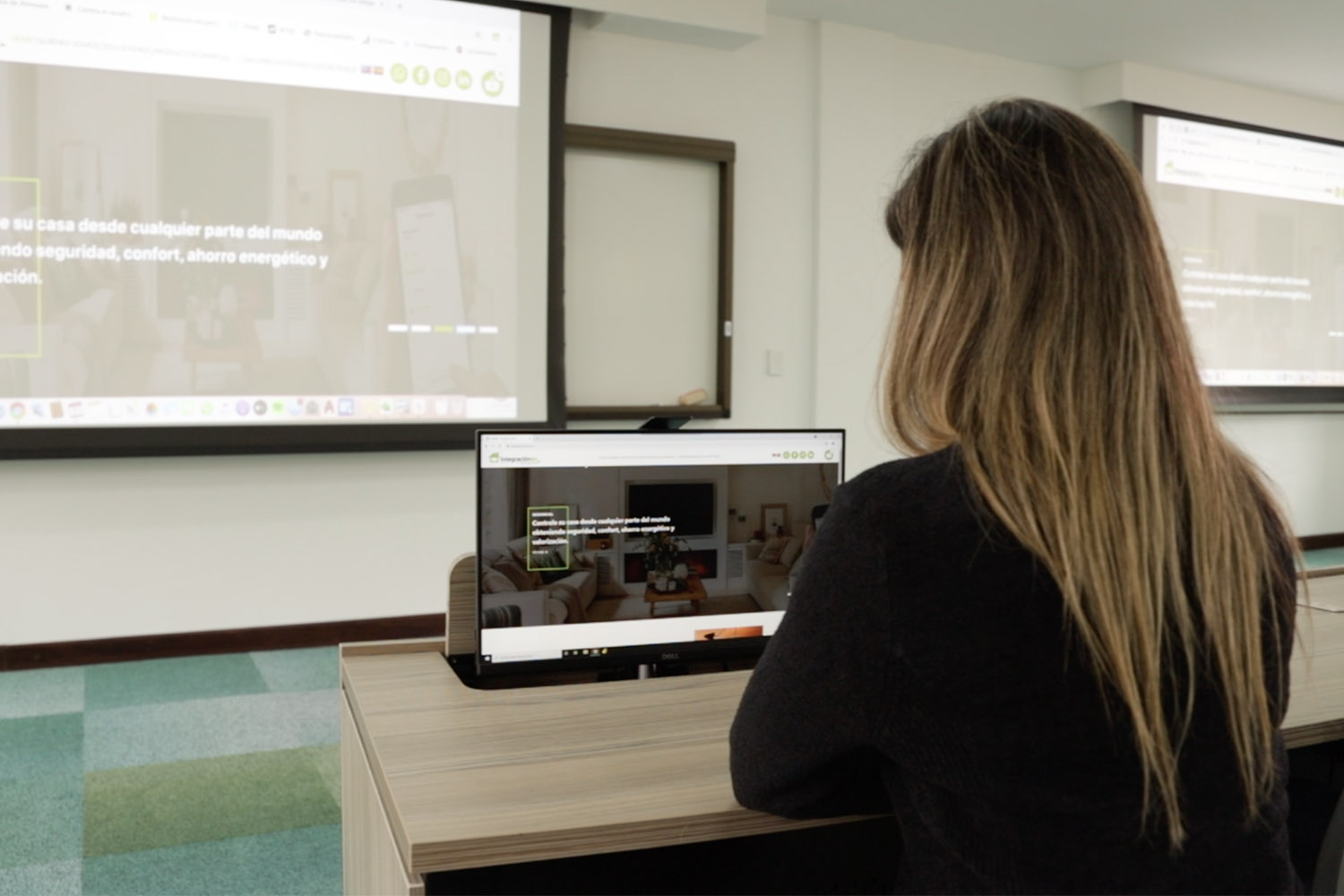
A key point that sets us apart is our commitment to environmental sustainability. We design smart spaces under policies that seek to reduce the impact on the planet. For example, we implement occupancy sensors and time scheduling that turn systems off automatically when there is no activity, optimizing the institution’s energy consumption and extending the service life of its equipment.