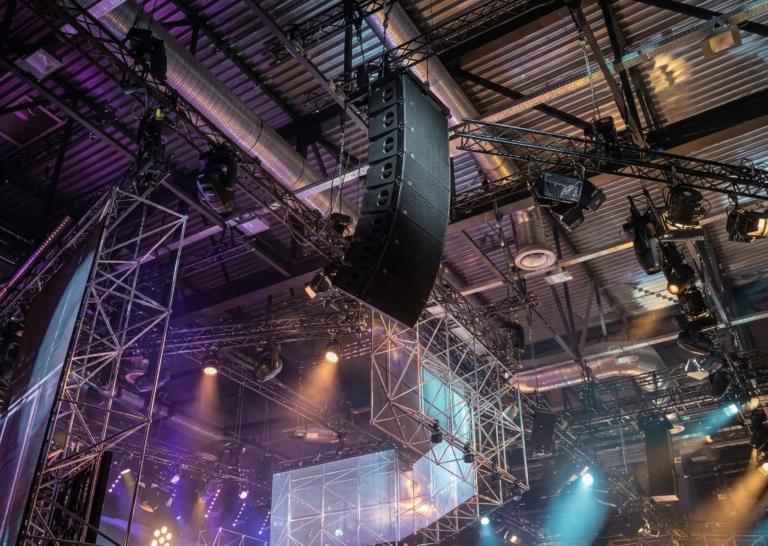
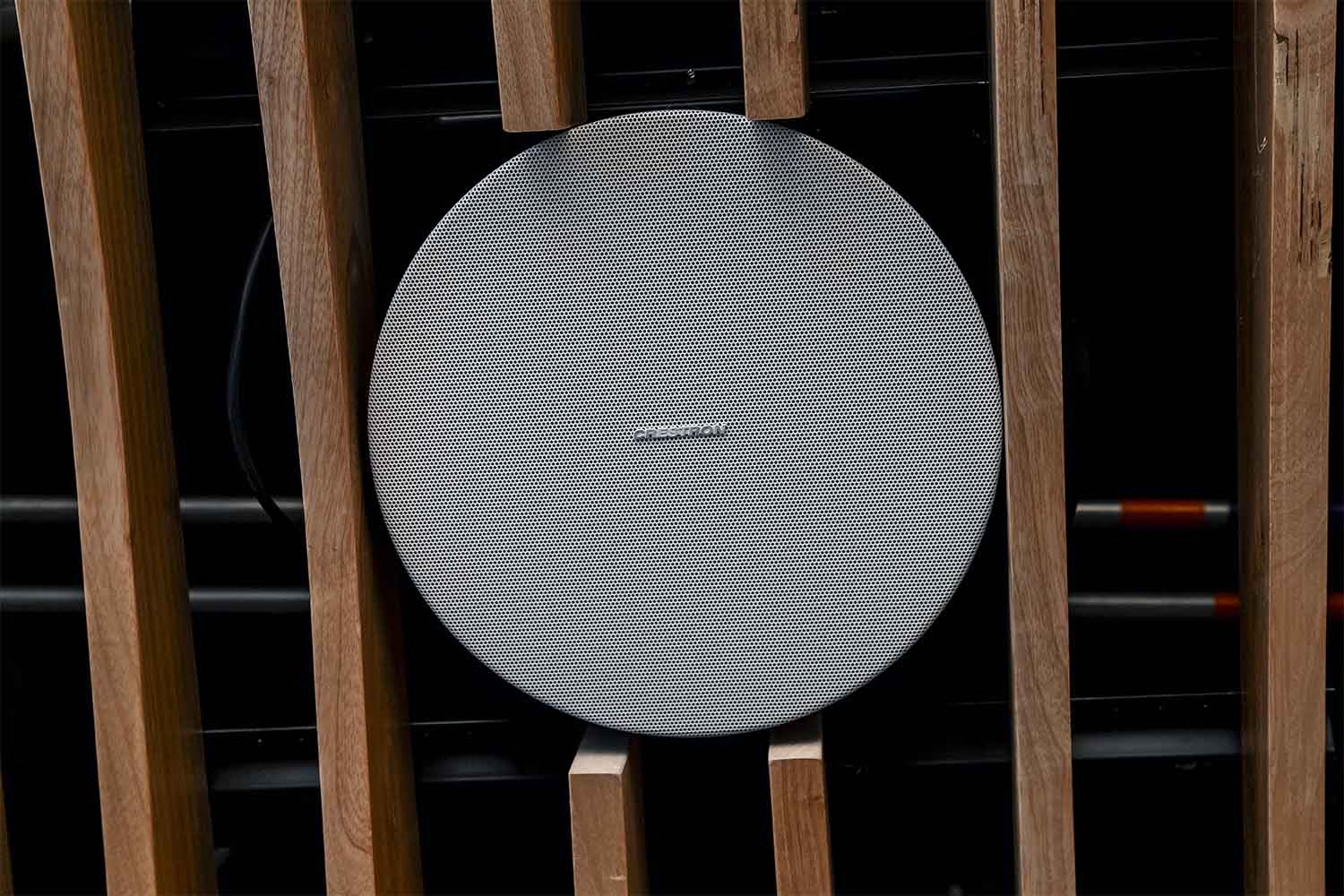
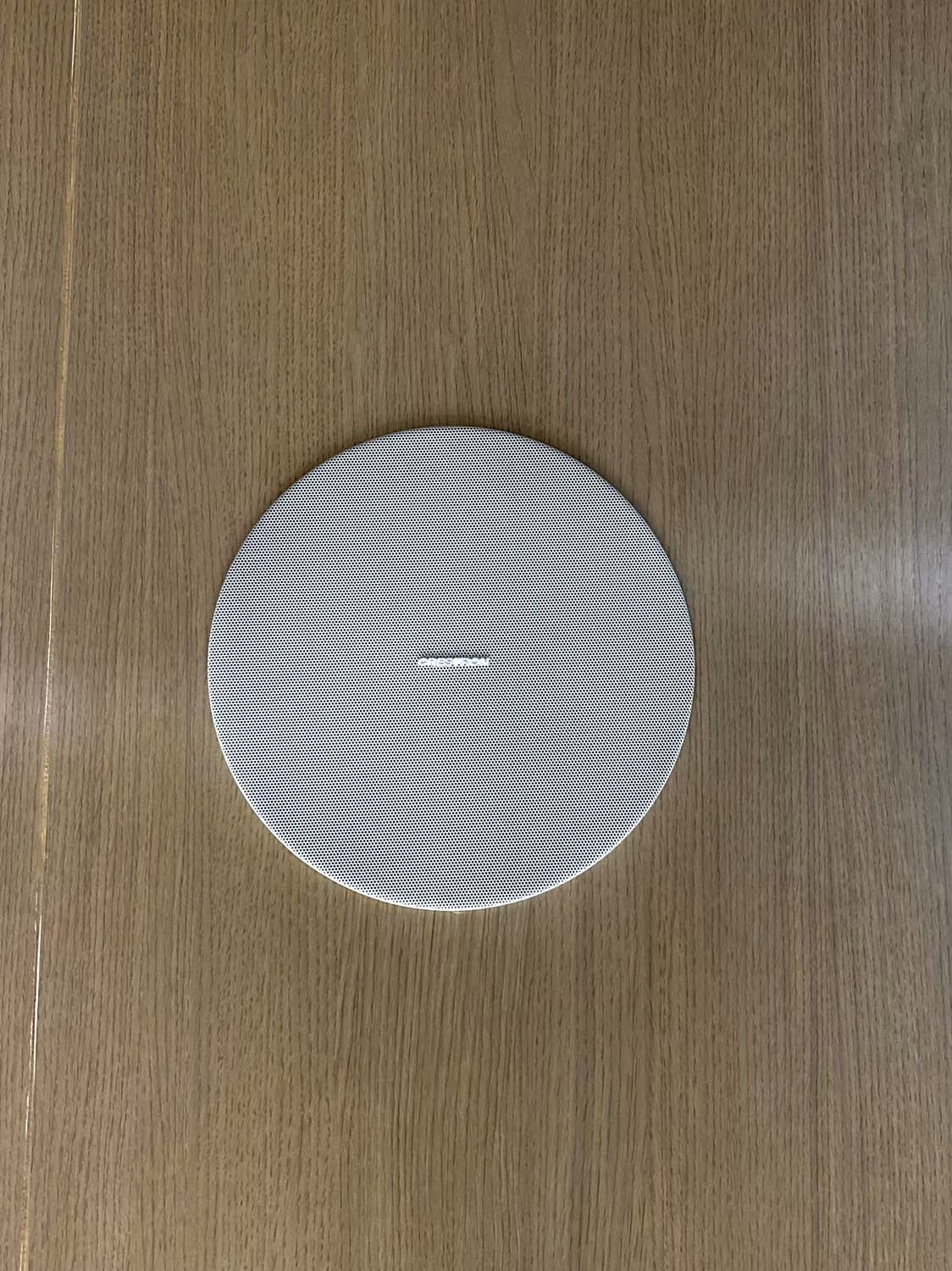
A ceiling speaker is a loudspeaker recessed into the ceiling that distributes sound evenly without taking up space or leaving visible cables; wall-recessed speakers serve the same purpose when the ceiling doesn’t allow it. They’re the foundation of background sound in offices, retail, hotels, and homes: several speakers at low volume cover an area better than one large speaker at full volume.
Speakers are one piece of the system. The complete solution, with zones, a processor, announcements, and paging, is in background music, paging, and professional audio.
Ceiling, Wall-Recessed, or Background Speakers: The Difference
The three terms are used almost interchangeably, but in a project they mean different things. A background speaker is any speaker built for background music and voice at a moderate level; it can go in the ceiling, recessed into the wall, or mounted on it.
The choice depends on the ceiling, the use, and the space’s look:
| Ceiling-recessed | Wall-recessed | Surface-mounted or pendant | |
|---|---|---|---|
| Where it’s used | Drop ceilings in offices, retail, classrooms, and homes | Spaces with no drop ceiling or very high ceilings | Double-height spaces, warehouses, and open areas |
| Coverage | Even, downward, in a circle | Forward, along the wall | Forward or in every direction, depending on the model |
| Look | Nearly invisible | Discreet, flush with the wall | Visible |
Where Ceiling Speakers Are Installed
Offices and Meeting Rooms
Discreet background music, floor-by-floor announcements, and audio for presentations and video calls.
Retail, Hotels, and Restaurants
Even ambient sound throughout the space, with announcements that come through clearly over the music.
Auditoriums and Classrooms
Several ceiling speakers so voice reaches the front and back rows at the same level.
Homes
Sound in the living room, kitchen, or bedrooms with no visible speakers or cables on the floor.
How Many Ceiling Speakers You Need
The number depends on the area, the ceiling height, and each model’s coverage angle. The design rule is that speaker coverage zones should overlap, so there are no dead spots where the sound drops and no corners where it overloads.
In large spaces, use also matters: background music allows more distance between speakers than a system where an announcement or page needs to be understood word for word. That’s why the calculation is done on the floor plan, before buying anything.
- The ceiling and its materials
- Height, drop-ceiling type, and clearance above it determine the model and how it’s mounted.
- How the space is used
- Background music, voice, announcements, or paging: each use calls for different coverage and level.
- Integration
- Amplification, zones, and control, so the new speaker works with what’s already there.
From a Speaker to Zone-Based Background Sound
A ceiling speaker sounds good when it’s part of a system: properly sized amplification, a processor that equalizes each zone, and controls to adjust the volume and source for every area.
That way reception, offices, and the break room can have different levels and music, and announcements lower the music automatically when needed.
Key idea
Several speakers at low volume, well distributed, sound better than a few speakers at full volume.
Installation and Maintenance
We install the speakers in coordination with construction or renovation, so cuts in the ceiling, wiring, and finishes are done right from the start. In spaces already in use, we reuse speakers and amplifiers still in good condition and integrate them into the new design.
When we’re done, we deliver the system documented and with preventive maintenance. If the space also needs microphones, see Shure microphones for rooms, classrooms, and auditoriums.
Frequently Asked Questions About Ceiling Speakers
What is a ceiling-recessed speaker?
It’s a speaker installed inside the ceiling, so only the grille remains visible. It distributes sound evenly downward and is the most discreet option for background music, voice, and announcements.
Ceiling speakers or wall-recessed ones?
If there’s a drop ceiling, ceiling speakers give the most even coverage. If there isn’t one, or the ceiling is very high, wall-recessed or surface speakers are used instead.
How many ceiling speakers does a space need?
It depends on the area, the height, and the use. It’s calculated on the floor plan so coverage overlaps and the level stays even throughout the space.
Can they integrate with the sound system I already have?
Yes, if the existing equipment is in good condition. We check the amplification and wiring and integrate them into the new design before proposing purchases.
Let’s Design the Sound for Your Space
The first conversation is a technical consultation: we review the space, the ceilings, how each zone is used, and which equipment can be reused. From there we prepare a proposal with the speaker calculation, timeline, and maintenance.
Request a Technical Consultation Message us on WhatsApp
Bogotá and Medellín · +57 301 656 9858