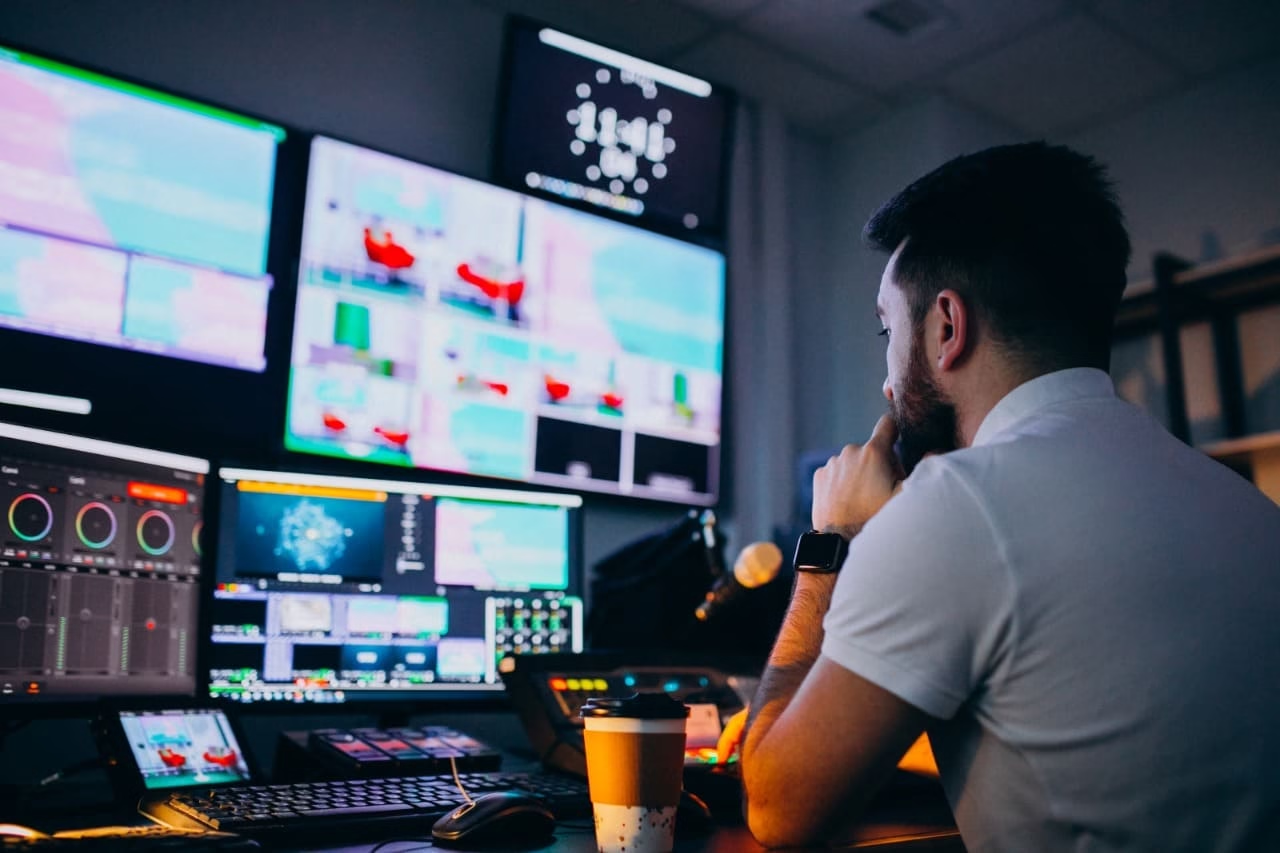
A monitoring room is the space where a team of operators watches cameras, alarms, and systems in real time, ready to react the moment something happens. Integración AV designs and installs monitoring rooms in Colombia: video wall, integration of cameras and security platforms, operator stations, and room control for 24-hour operation.
This guide explains how a monitoring room is installed, also called a security room or monitoring hub. The complete solution, with brands and the delivery process, is on our monitoring and control centers page.
In short
- A monitoring room is sized by the number of cameras and operators, not the size of the wall.
- It includes a video wall, processor, camera integration, per-seat screens, and room control.
- It’s designed to run without pause: redundancy, maintenance with no shutdown, and documentation.
- Operator ergonomics decide the wall’s size, height, and placement.
Monitoring room, control room, and crisis room
The three spaces share technology and are often confused, but they serve different moments of an operation:
| Aspect | Monitoring room | Control room | Crisis room |
|---|---|---|---|
| What it’s for | Permanently watching a space or a group of sites | Supervising a process or a service: a plant, a network, or a transit system | Deciding once the situation has already escalated |
| When it operates | All day, in shifts | All day, in shifts | Only when activated |
| What the wall shows | Cameras, alarms, and security systems | Video and operating variables | What comes from monitoring, plus video conferencing |
| How it’s sized | By cameras and operators | By processes and operators | By the decision-making group and its communications |
The difference matters before installing, because it changes the design. If your project is about process supervision, see what a control room is; if it’s about decision-making, see what crisis room installation includes.
What gets installed in a monitoring room
- Video wall
- A wall of screens or LED modules that works as a single surface, where cameras and systems open in windows sized to each situation. Details in video wall installation.
- Processor and control software
- They receive the signals and distribute them across the wall, so the view changes without touching the cabling.
- Camera and CCTV integration
- Centralizing the security cameras and the platforms the organization already uses into a single viewing point.
- Screens at every seat
- Beyond the shared wall, each operator works with their own screens to check details without changing what others see.
- Room control
- A touch panel to power on the room and switch between display scenarios, with custom programming.
- Connection with outside agencies
- The room can link with other control rooms or with agencies such as police or fire departments, so the alert goes out the moment the operator detects it.
How a 24/7 room is designed
A monitoring room runs day and night, with rotating shifts and operators spending long hours facing the wall.
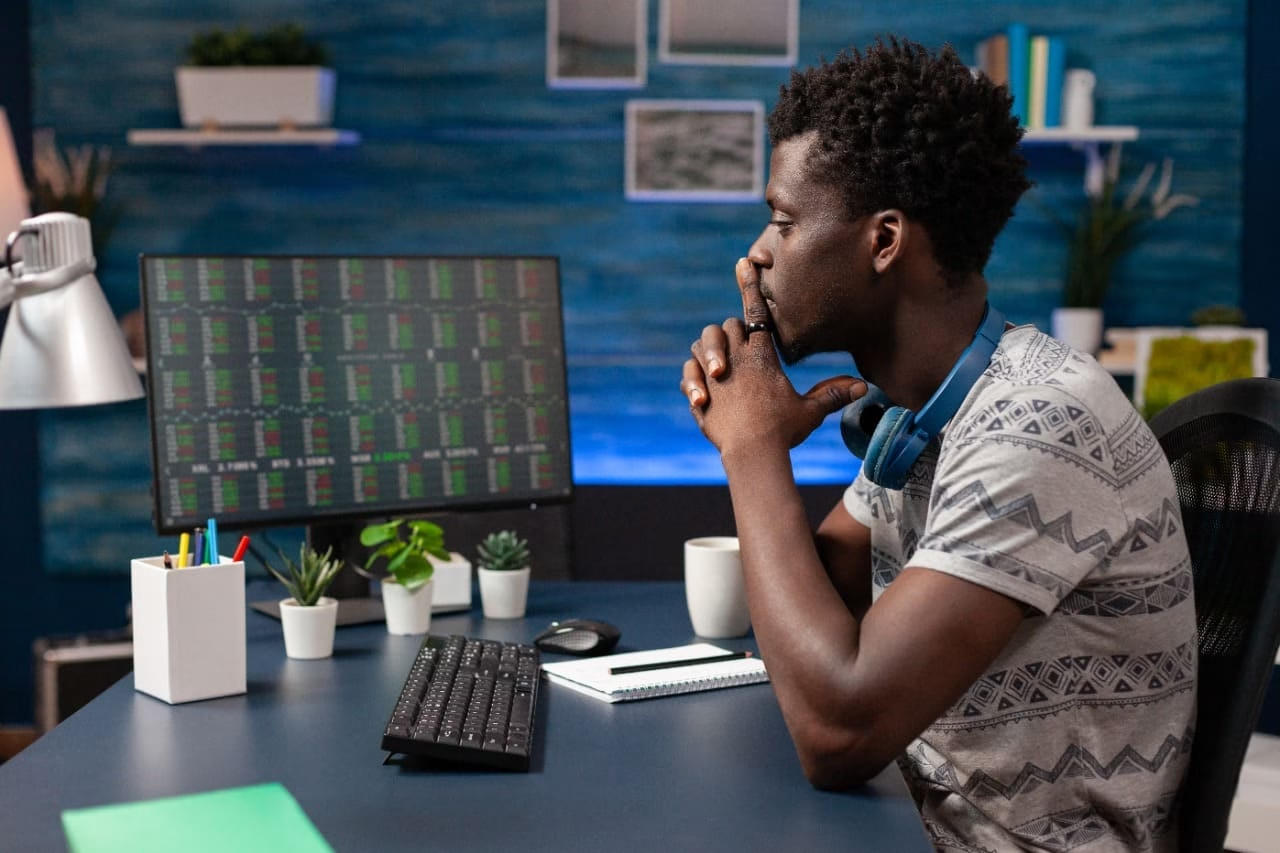
The first decision is continuity: which components are duplicated so a single fault doesn’t leave the room without an image. The second is maintenance: the room is built so a component can be checked without shutting down the rest of the system.
The third is documentation. We deliver the room with drawings and diagrams under industry standards, so a technician who wasn’t part of the build can understand and service it years later.
Ergonomics: the operator facing the wall

The wall’s size and each window’s size are calculated from the operator’s position. What matters is being able to read a plate, a text, or an indicator from their seat, with no eye strain over a full shift.
The wall’s height and angle count too — they shouldn’t force operators to look up for hours.
Placement is defined considering the room’s windows and light fixtures, because a glare on the screens can hide exactly the image that mattered.
Seat layout closes out the design. Every operator needs an unobstructed view of the wall and their own screens within reach, and the shift supervisor needs to see the wall and their team at the same time.
Technology we integrate
For video wall software and multi-window display we work with Polywall; for the wall’s LED screens, with Unilumin; and for room automation and control, with Crestron. The combination is defined per project based on the sources, the space, and the number of operators.
When existing cameras, monitors, or cabling are in good condition, we integrate them into the new room instead of replacing them. It’s part of our sustainability commitment and lowers the project cost.
How we work
- Technical site visitWe assess the cameras and systems to integrate, the shifts, and the available space.
- Design and proposalWe deliver floor plans, the wall’s architecture, the scope, the schedule, and the after-sales model.
- Installation and programmingWe install the wall, the processor, and the control, and integrate the existing cameras and platforms.
- Training and after-sales supportWe train the operators; preventive maintenance and technical support keep the room running with agreed response times.
We work from Bogotá and Medellín, with national coverage.
Frequently asked questions about monitoring rooms
How many screens does a monitoring room need?
It’s not calculated by the number of cameras, but by what the operator needs to see at the same time. The processor lets you show many cameras on one screen and enlarge just the one that needs attention, so the wall’s size comes from the viewing distance and the number of simultaneous windows.
Can a monitoring room connect with police or fire departments?
Yes. The room can link with other control rooms and with outside agencies so the alert goes out as soon as the operator detects it. The scope of that connection depends on the protocols agreed with each agency and is defined in the design.
What maintenance does a room running 24/7 need?
Scheduled preventive maintenance, checking screens, processor, control, and cabling, plus technical support when a failure occurs. In a room that never shuts down, visits are planned to intervene without stopping monitoring.

Get a Quote for Your Monitoring Room Installation
Tell us how many cameras and systems you need to integrate, how many operators will work in the room, and what city you’re in. With that information we prepare a proposal with the design, scope, schedule, and after-sales model.
Request a Technical Consultation Message us on WhatsApp
Bogotá and Medellín · +57 301 656 9858