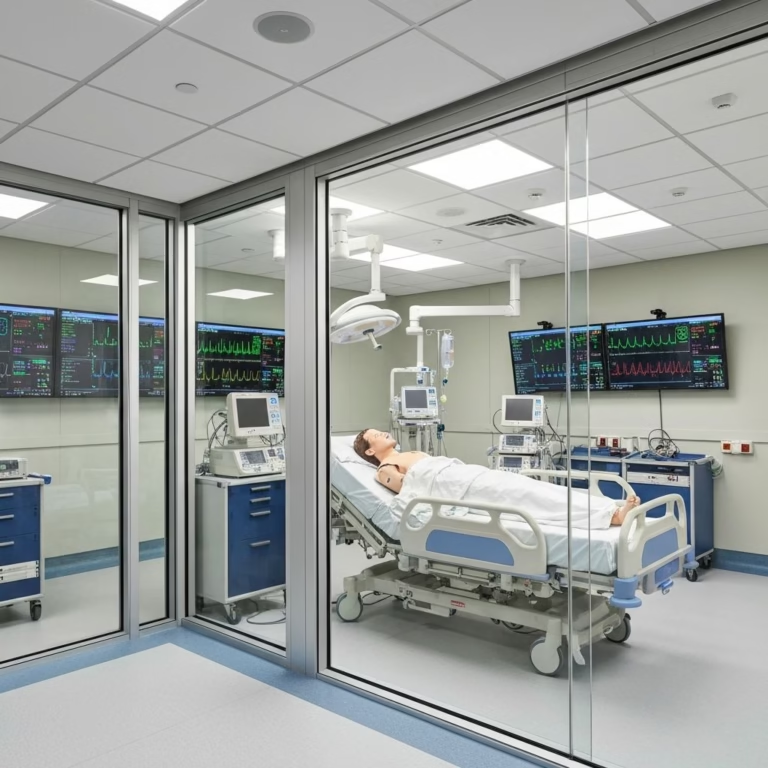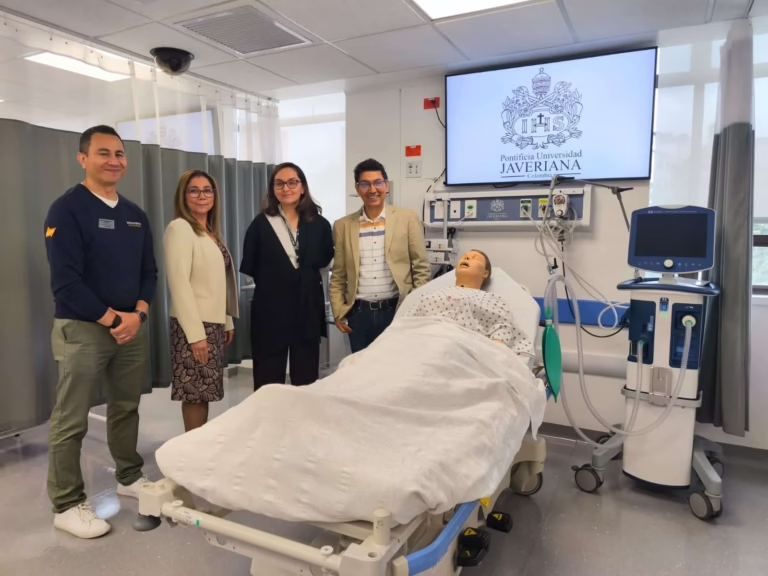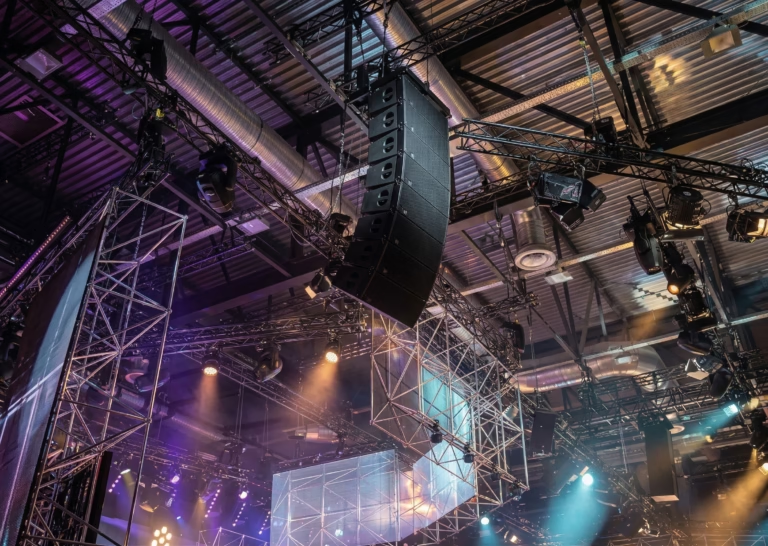
Installing a crisis room means building the space where an organization makes decisions once a situation has already escalated. Integración AV designs and installs crisis rooms in Colombia: video wall, integration of information sources, communications with field staff, and room control, with the documentation needed to keep it running over time.
A crisis room almost never works alone. It’s usually backed by a monitoring and control center that watches the operation permanently and feeds it information when something falls outside normal. If you’re still defining which space you need, what a crisis room is for explains its functions and when it activates.
In short
- The room is designed from the protocol: who enters, what they need to see, and who they communicate with.
- Typical scope covers a video wall, processor, sources, communications, room control, and recording.
- Redundancy and preventive maintenance decide whether it works the day it’s activated.
- It can share sources and control with the monitoring center, without duplicating equipment.
What’s defined before installing a crisis room
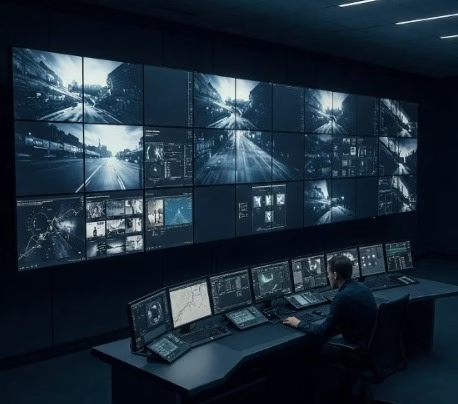
A crisis room isn’t designed starting from the equipment, but from the protocol it will run. Before talking about screens, it’s worth answering three questions: who enters the room when it activates, what information that group needs to see, and who they need to communicate with from there.
Those answers determine the number of seats, the size of the video wall, and how many sources the system needs to handle.
A practical decision also comes out of this: whether the room will be for exclusive use, or will serve as a meeting room the rest of the time and be reconfigured when an emergency happens.
At this stage we produce the audiovisual system design with floor plans, single-line diagrams, and schematics under industry standards. That design lets us quote precisely and is the same one the technical team later uses to maintain the room.
What crisis room installation includes
Scope changes with every project, but a full installation usually covers these systems:
- Video wall
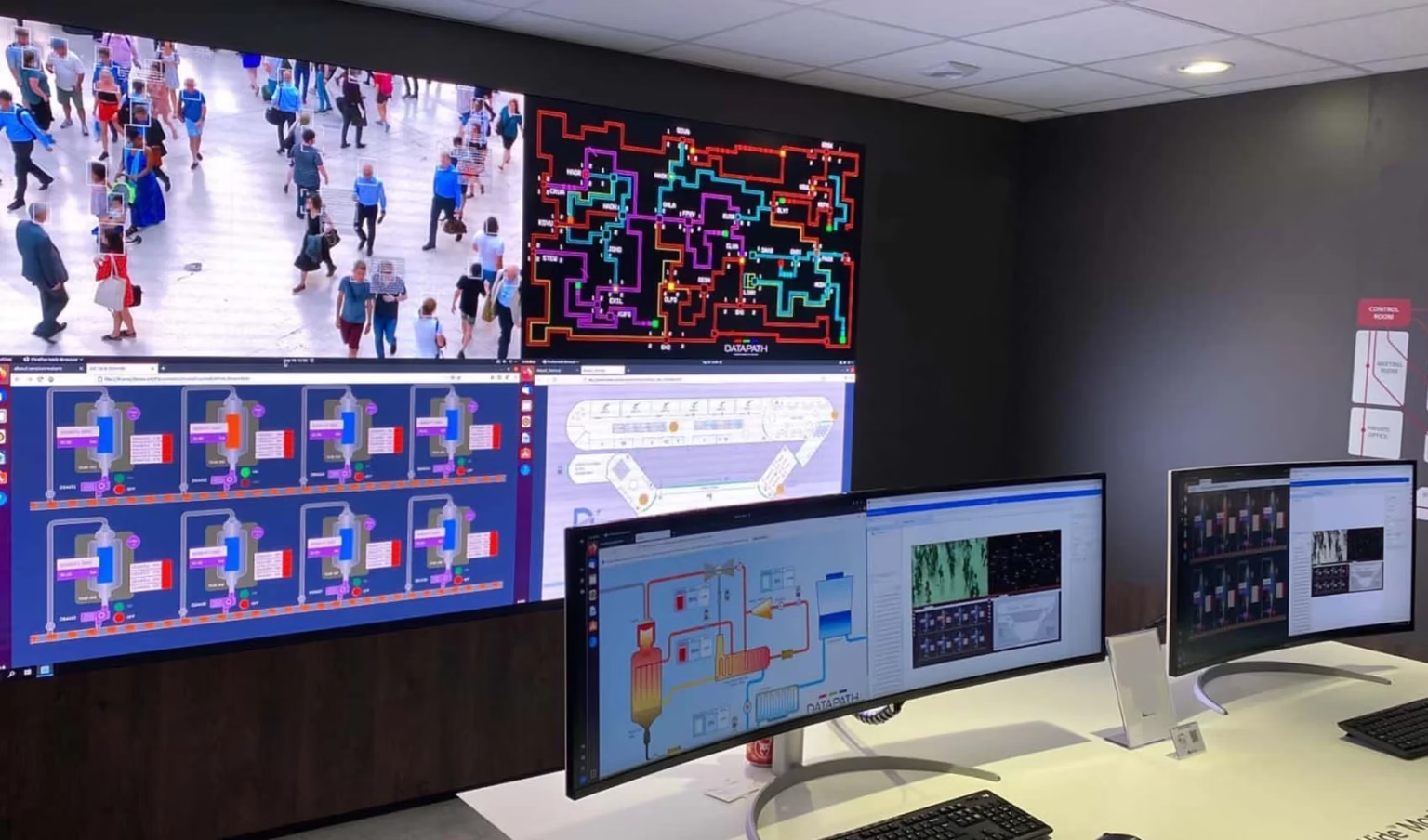
- A video wall of screens or LED modules where the group sees cameras, maps, data dashboards, and video from other sites at the same time.
- Processor and control software
- They receive every signal and decide what shows, in which window, and at what size. With them, the wall’s view rearranges based on the situation, with no cables to move.
- Source integration
- Connecting the cameras, security platforms, and information systems already in place, so they reach the wall without anyone having to switch screens.
- Communications
- Video conferencing and room audio to talk with field staff, other sites, and outside agencies without leaving the room.
- Room control
- A touch panel that turns on the room and switches between display scenarios, with Crestron programming built to the protocol.
- Recording and logging
- Capturing what was seen and said during the activation, to review the event afterward and refine the protocol.
Redundancy: making sure the room works the day it’s needed
A crisis room can go weeks without being used and has to work the first time it’s activated. That’s why the design defines which components are duplicated, so a single fault doesn’t leave the room without an image or without communication.
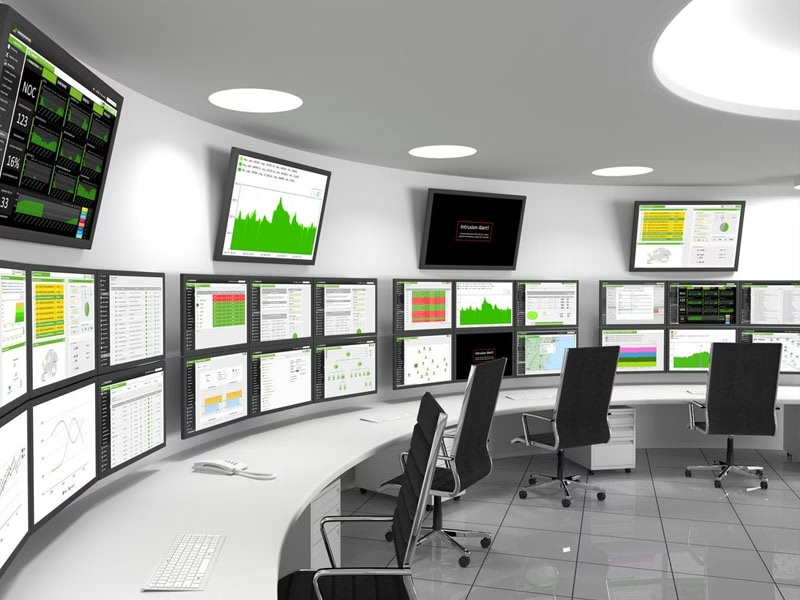
Periodic testing and preventive maintenance prevent that surprise: screens, processor, control, and communications are checked with the room powered down, not in the middle of an activation.
Communications: the room reaching outward
A crisis room coordinates, and to coordinate it needs to talk to people outside it. Video conferencing connects those in charge with field staff, other sites, and the outside authorities taking part in the response.
We integrate video conferencing systems with platforms from manufacturers such as Cisco and Poly, plus room audio so every participant is heard clearly. Whatever comes through the video call can be shown on the same wall, alongside the rest of the information.
What the installation process looks like
- Technical site visitWe review the space, the sources to integrate, the existing infrastructure, and which equipment can be reused.
- Design and proposalWe deliver floor plans, the wall’s architecture, the scope, the schedule, and the after-sales model.
- Installation and programmingWe install the wall, the processor, the control, and the communications, and program the room’s scenarios.
- Testing and trainingWe test every scenario with the team that will use the room and deliver the documentation.
- After-sales supportPreventive maintenance and technical support with agreed response times.
Example: a crisis room alongside a monitoring center
A scenario that illustrates the scope: an agency that already has a 24/7 monitoring center and needs a crisis room at the same site. Instead of building a second system, the crisis room is designed to share the monitoring center’s sources and control.
When it activates, the officer on duty sends the crisis room wall the cameras and dashboards the operator was already watching. The decision-making group sees exactly the same thing and talks by video conference with field staff, while the monitoring center keeps watching the rest of the operation.
That way equipment isn’t duplicated and nothing has to be rewired every time the protocol changes. It’s the same logic behind how we approach monitoring room installation at a site with permanent operations.
You may also be interested in
What a control room is and how it’s designed · Video wall installation: LED or LCD, processor, and software
Why Integración AV
2006
The year Integración AV has been integrating audiovisual spaces in Colombia, based in Bogotá, with an office in Medellín and national coverage.
Our team holds AVIXA’s CTS certification and is Crestron Master Gold and a Crestron Service Provider, so the room’s control is programmed to order instead of adapted from a template.
When existing cameras, screens, or cabling are in good condition, we integrate them into the new room instead of replacing them. It lowers the project cost and avoids discarding equipment that still works, an approach we cover in sustainable technology for crisis rooms.
Frequently asked questions about crisis room installation
How long does it take to install a crisis room?
It depends on the wall size, the number of sources to integrate, and whether the space’s construction work is already done. The schedule comes with the proposal, after the technical site visit, and is agreed so it doesn’t interrupt the agency’s operation.
What information can be shown on a crisis room’s wall?
Any source that reaches the processor: security cameras, maps, data dashboards, alert systems, and video conference feeds. The control software lets you open several at once, resize them, and save preset views for each type of emergency.
What happens if a screen or piece of equipment fails during an activation?
The design defines in advance which components are duplicated so a single fault doesn’t leave the room without an image or without communication. The after-sales plan also sets the support response times, and preventive maintenance lowers the odds of a failure showing up on that exact day.
Request a Technical Consultation for Your Crisis Room
Tell us what operation the room needs to serve, who will use it, and what systems you have today. With that information we prepare a proposal with the design, scope, schedule, and after-sales model.
Request a Technical Consultation Message us on WhatsApp
Bogotá and Medellín · +57 301 656 9858