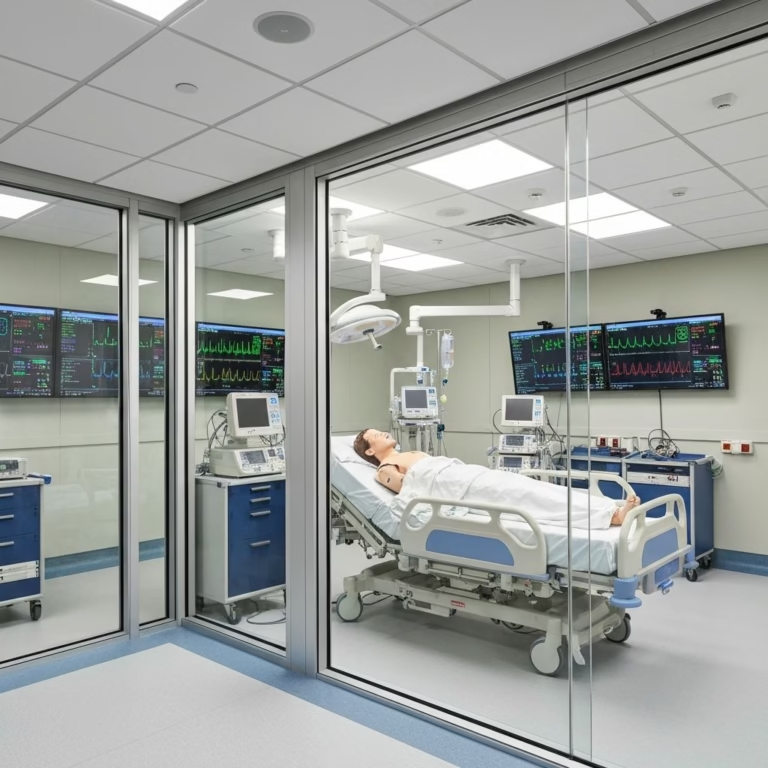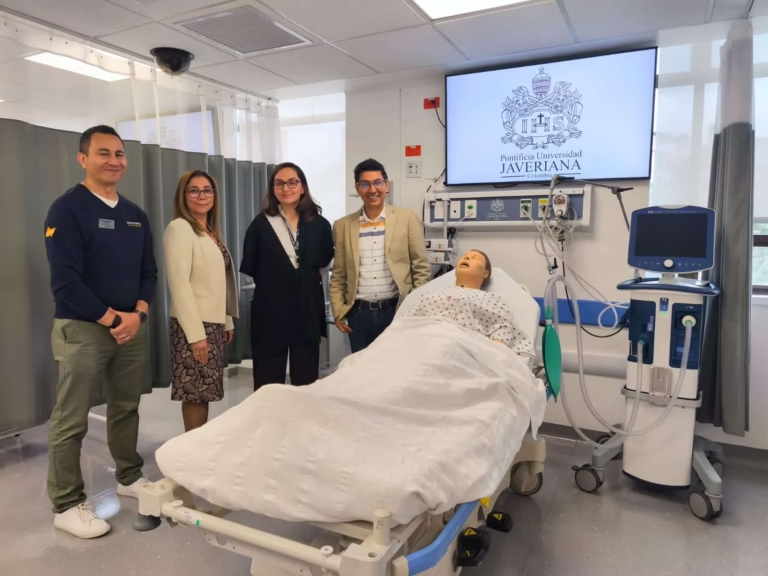
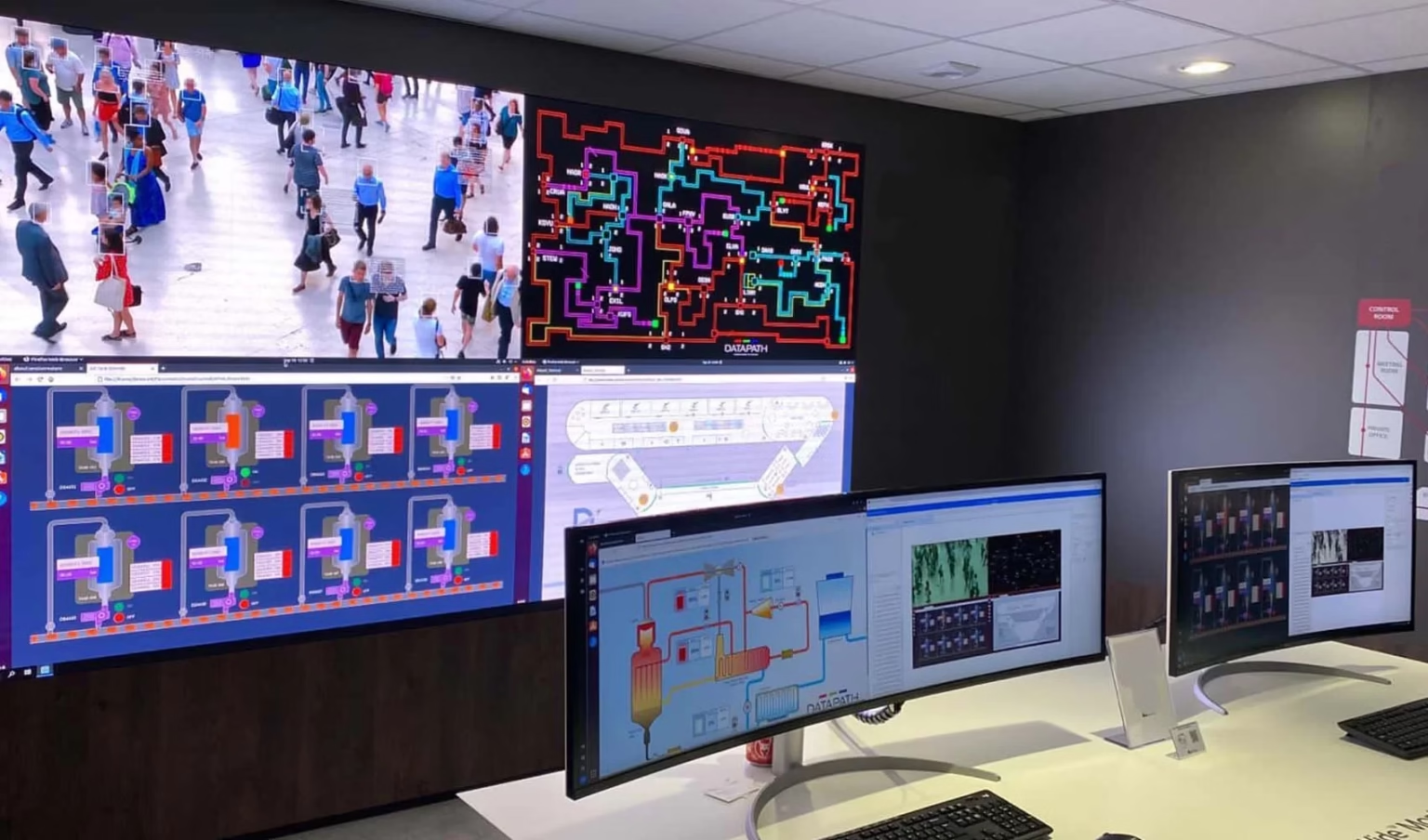
A crisis room is where decisions are made under pressure with the full picture in view. It is a space that is activated when an emergency occurs: it brings the people in charge together, shows what is happening in real time on screen and lets the team run the response protocol without losing minutes piecing the situation back together.
It is not the same as a control room, which watches over operations every day. In this guide we explain what each one is for, which equipment makes up a crisis room and how it is designed so it works on the day it is needed.
At Integración AV we design and integrate monitoring centers and crisis rooms for government agencies, security companies and operations centers in Colombia.
Definition
What is a crisis room?
A crisis room is a space designed specifically to monitor information and display it so that decision-makers receive it continuously and can react to critical situations or emergencies.
Main goal
Receive information immediately, centralize it, analyze it and make fast, effective decisions.
Crisis rooms are common in government, corporate and security settings, where it is essential to react quickly to threats that could affect both people’s physical safety and an organization’s operations.
AV (audiovisual) integration in these rooms provides the advanced audio and video tools needed to monitor, communicate and coordinate the crisis team’s actions, so participants can see and share critical information in real time.

Functions
What does a crisis room do during an emergency?
The purpose of a crisis room is to act as the coordination hub during an emergency. In these spaces, the people managing the crisis can carry out the following actions:
Monitoring and analyzing the situation
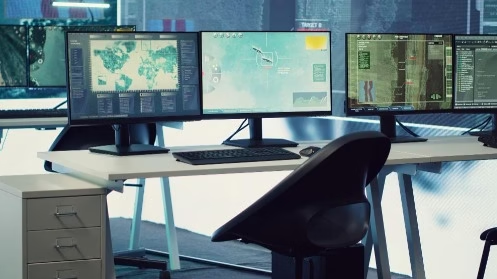
Thanks to integrated audiovisual technology, these rooms display multiple sources of information on screen, such as live video from surveillance cameras, interactive maps and security indicators. This makes a fast, accurate analysis of the situation possible.
Centralized decision-making
With the information centralized in one place, the crisis team can assess the state of the emergency and make well-founded decisions.
Activating crisis plans
In an emergency, every second counts. Crisis rooms make it possible to trigger alerts, contingency plans and preventive measures immediately, thanks to internal and external communication systems that work together.
Coordinating with other facilities
With video conferencing and secure connections, the crisis room can communicate with field staff or senior leadership, making sure everyone involved is aligned.
Comparison
Differences between a crisis room and a control room
Crisis rooms are often confused with control rooms. Although both are dedicated to managing critical operations, there are key differences:
| Aspect | Control room | Crisis room |
|---|---|---|
| Main function | Monitor the day-to-day operations of a company or institution. | Act as the coordination hub during an emergency. |
| When it is used | Every day, in routine operations. | Only when a situation has escalated beyond what the control room can handle. |
| Who is in it | Operators. | The people responsible for the crisis. |
| What the team does | Detects problems before they turn into a crisis. | Makes decisions based on up-to-date, real-time data. |
Both rooms can complement each other through AV technology, which makes the transition from routine operations to an emergency easier.
You may also be interested in
Technology
Why AV (audiovisual) integration matters in a crisis room
Audiovisual technology is essential to a crisis room’s operation. From interactive displays and video walls to high-quality video conferencing systems, AV integration lets information flow without obstacles. These are some of the most important systems:
Video walls or large-format displays
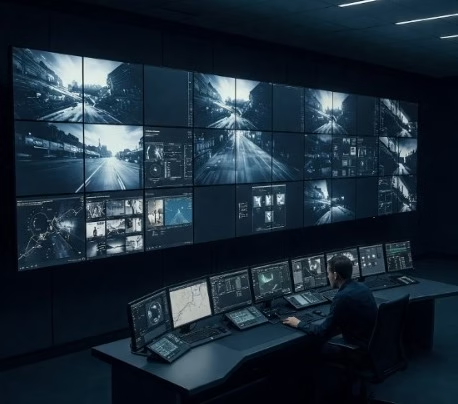
They show several sources of information at the same time, which is essential in a crisis room, where data from different sources has to be seen and analyzed at once.
Video conferencing systems
Video conferencing is indispensable for coordinating communication between teams that may be in different locations. A good AV system keeps that communication smooth and lets everyone take part in the call.
Interactive displays
They let teams annotate, edit and share information in real time, making collaboration easier in critical situations.
Design
Designing an efficient crisis room: modularity and flexibility
Every crisis is different, which is why crisis rooms need to be versatile. Modularity is key when designing these spaces. Tables and chairs should be easy to rearrange as needs change, and the audiovisual equipment should be easy to operate and adaptable to different situations.
An important point is that a crisis room should not be limited to emergencies. When there is no crisis, the space can be used as a meeting room, making the most of it.
Key idea
A crisis room is judged by how it responds on the day it is activated, not by the equipment it has installed.
That is why the design starts by understanding which situations it must cover, who enters the room and what information they need in the first minutes.
That assessment is the first step of installing a crisis room, and it defines the size of the video wall, the sources to integrate and the type of connection with field staff.
Frequently Asked Questions about Crisis Rooms
When is a crisis room activated?
It is activated when a situation goes beyond what day-to-day operations can handle: a security emergency, a failure that affects service continuity or an event that requires several areas to coordinate at once. Until that happens, continuous monitoring is done by the monitoring center or the control room. The crisis room is the space for the exception, not the routine.
Who should be in a crisis room during an emergency?
The people who make decisions about the situation and those who handle the information they need to decide. The room is designed so that this group sees the same thing at the same time and can talk to field staff and external leadership without leaving the space. The number of workstations and the size of the video wall are defined around that group.
Can an existing meeting room be turned into a crisis room?
Yes, and it is a common decision. When the room is designed with rearrangeable furniture and easy-to-operate equipment, it works as a meeting room the rest of the year and becomes a crisis room when needed. We also review which displays, cameras and cabling already exist so that anything in good condition can be reused and the project cost goes down.
Let's Talk About the Crisis Room Your Operation Needs
The first conversation is a technical consultation: we review which situations the room must cover, which systems you already have and what needs to be integrated. From there we prepare a proposal with the scope, the schedule and the after-sales support model.
Bogotá and Medellín · +57 301 656 9858
See how a crisis room is installed, step by step.